Leave Your Message

Where to Buy Top Old Chain Making Machines in China?

Choosing where to buy a top old Chain Making Machine in China takes more than comparing prices. Buyers should examine the machine’s working condition, chain-size range, production speed, and access to replacement parts. A polished showroom photo is not enough. Ask for a live test using the material and chain pattern you plan to run.

This introduction uses a fictional adviser, Lin Wei, to express a practical sourcing principle: “A dependable chain starts with a machine you can inspect, test, and maintain.” This is an original illustrative line, not a verified quotation from a real industry expert. For reliable purchasing decisions, confirm supplier experience through verifiable references, technical records, and clear after-sales terms.

Look closely at worn gears, alignment, guards, and the control panel. Request close-up photos and a short video of the machine operating under load. If possible, arrange an independent inspection before payment. Small details matter. A rough feed mechanism may cause uneven links, wasted wire, and slower output. Ask how quickly common parts can be shipped, and whether manuals and operating guidance are available.

Older equipment can offer value, but age alone proves little. Some machines remain productive after careful refurbishment; others need costly repairs. Be cautious of incomplete specifications or unusually low prices. A better supplier answers direct questions and documents the machine’s condition. Even then, one detail may be missed. Keep a written checklist, compare several sellers, and leave room for further inspection before making a final choice.
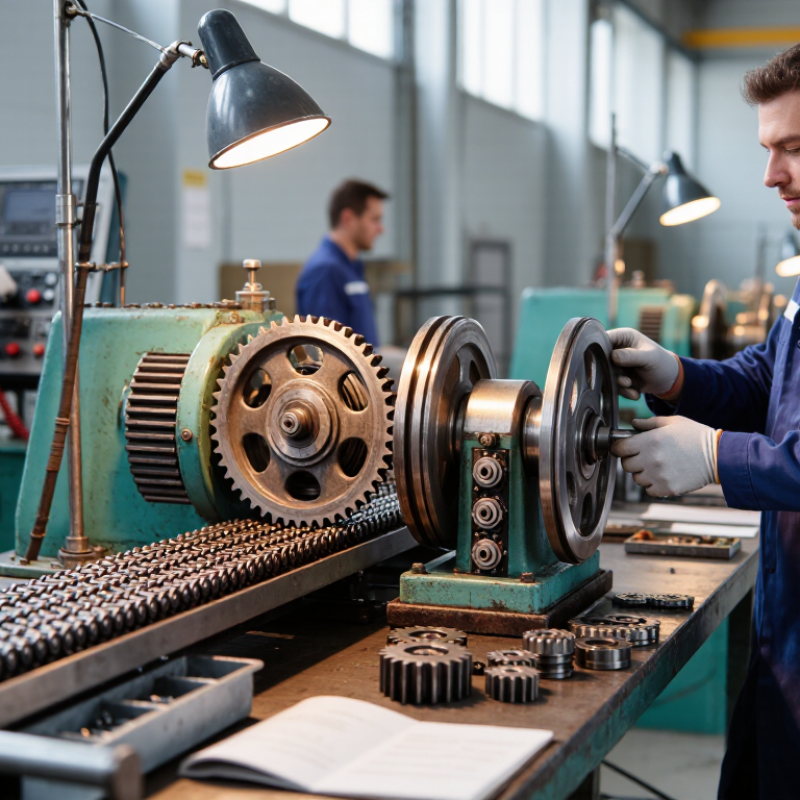
Where to Buy Top Old Chain Making Machines in China?

Understanding Old Chain-Making Machines and Their Industrial Uses

An old chain-making machine is usually a used or earlier-generation unit that forms metal wire into linked chain. Depending on its design, it may cut, bend, and close each link through mechanical cams, dies, or powered tooling. Some models suit one chain size; others allow adjustments. That difference matters.

These machines serve workshops producing general-purpose chain for conveyors, agricultural equipment, gates, and other industrial applications. Output quality depends on more than speed. Operators need consistent wire feed, correctly matched dies, and careful checks for uneven links or weak closures. A practical inspection starts with the frame, drive components, tooling wear, and available maintenance records. Ask to see the machine run, if possible.

Older equipment can be straightforward to maintain, especially when its mechanisms are familiar and replacement parts remain available. But “old” does not automatically mean reliable. Controls may be limited, guards may need attention, and setup can require patient adjustment. A machine that runs smoothly without wire may behave differently under production load. That can be frustrating. For chains used in load-bearing applications, confirm that the finished product meets the required specifications through appropriate testing; appearance alone is not proof.
Identifying China’s Established Chain-Making Machine Manufacturers

Choosing an established chain-making machine manufacturer in China takes more than comparing prices or browsing product photos. Look for a company with a consistent operating history, a dedicated production site, and technicians who can explain how each machine handles wire size, chain pitch, and output speed. Details matter. Ask whether the equipment is designed for a specific chain type or can be adjusted for several configurations.

A credible supplier should provide clear specifications, machine drawings, and records of factory testing. Request a live demonstration using material similar to yours. Watch for steady feeding, clean forming, and consistent links; unusual vibration or frequent manual correction deserves attention. Ask about spare-part availability, operator training, installation support, and typical maintenance intervals. These details often reveal more than a polished showroom.

Compare several manufacturers using the same checklist, and verify claims through references or an independent factory visit when practical. A long history alone does not guarantee suitable equipment. Nor does the lowest quotation prove poor quality. Some information may remain unclear until a trial run, so include acceptance criteria in the purchase discussion and document any open questions before ordering.

Comparing Supplier Locations, Product Ranges, and Buying Channels

Supplier locations matter, but the best fit depends on chain type, production volume, and service access. Guangdong, Zhejiang, and Jiangsu offer broad machinery and metalworking ecosystems. Compare factory addresses, not just sales-office locations. Ask whether the supplier builds complete machines or mainly resells equipment. Product ranges can span basic single-purpose units, automatic models, and configurable production lines. Check the materials, chain dimensions, and output speeds each model supports.

China’s National Bureau of Statistics reported that manufacturing value added among industrial enterprises above designated size grew 5.0% in 2023. This is useful industrial context, not a measure of chain-machine demand. Compare suppliers through direct factory contact, vetted online directories, and trade fairs. Request a live demonstration using your target material, then review cycle consistency, changeover time, spare-parts availability, and installation terms. A polished catalog can still hide a narrow service team.

Tips

Ask for a written quotation that separates machine price, tooling, shipping, and commissioning. Request recent test footage and references for similar production needs. Small detail, big difference. Allow time for a factory visit; distance and translation can complicate a rushed purchase.

Evaluating Machine Condition, Specifications, and After-Sales Support

Where to Buy Top Old Chain Making Machines in China?

When sourcing an older chain-making machine in China, judge its working condition before its paintwork. Ask to see it running under load, not merely powered on. Watch for uneven feed, vibration, skipped links, and oil leaks around the drive and forming stations. Request maintenance logs, tooling lists, electrical diagrams, and a recent video showing a full production cycle. Verify the machine’s chain-size range, output rate, motor details, and compatibility with your available power. A clean exterior can mislead.

After-sales support matters because worn dies, sensors, or feed components may stop production. Ask what spare parts are available, how quickly they can ship, and whether remote troubleshooting or technician visits are offered. McKinsey’s 2018 report, “Unlocking the Value of Predictive Maintenance,” estimated that predictive maintenance can reduce machine downtime by 30–50% across industrial settings. That is not a guarantee for any chain machine, but it shows why service records and condition monitoring deserve attention. I would still treat seller estimates cautiously; real output depends on material, operator skill, and setup.

Tips: Ask for a test using your intended wire size. Record cycle time, reject rate, and noise. Put service scope and parts availability in writing.

Where to Buy Top Old Chain Making Machines in China?

Compare key checks for evaluating a used chain-making machine before purchase.

How to read this chart: Scores are an illustrative example on a 1–5 scale, not verified market-wide data. Assess each machine using its own inspection results, specification documents, and written after-sales terms. Check operating condition, confirm specifications through a test run, and clarify spare-parts availability and service response before buying.

Verifying Suppliers and Arranging Purchase, Inspection, and Shipping

When sourcing an old chain making machine in China, verify the supplier before discussing a deposit. Request a registered business name, workshop address, and recent photos of the exact machine. Ask for a live video showing its nameplate, controls, feed system, and operation with material. Details matter. A polished catalog cannot show worn guides or inconsistent chain pitch. Compare the machine’s stated model and year with its service records, spare-parts list, and export documents. If answers keep changing, pause.

Put the agreed condition in the purchase contract. List included tooling, motor details, voltage, output range, and any known defects. Specify what happens if the machine fails an agreed test. A third-party inspector can check safety guards, electrical components, lubrication, and sample-chain dimensions before final payment. Ask for a continuous test video, but treat it as supporting evidence, not a substitute for inspection. Even a careful check has limits; hidden wear may appear only after extended use.

Before shipment, confirm packing dimensions, gross weight, loading method, and who handles export clearance. Photograph the machine from several angles, then protect exposed metal with rust-preventive wrapping and secure loose parts separately. Request the packing list and shipping documents for review. Sea transport takes time. Agree on insurance coverage and delivery terms in writing, and check that the receiving site has suitable unloading equipment. Small omissions can become expensive. One checklist may still miss something.

Where to Buy Top Old Chain Making Machines in China? - Verifying Suppliers and Arranging Purchase, Inspection, and Shipping

Machine or Sourcing Stage Suitable Use What to Verify Evidence to Request Purchase, Inspection, or Shipping Action
Industrial B2B sourcing platform Finding multiple machinery suppliers and comparing specifications, configurations, and quotations. Whether the seller is the manufacturer or a trading company; business registration details; years of experience with the specific machine type; and availability of technical support. Business license, factory address, machine datasheet, recent production videos, references for comparable installations, and a written quotation. Shortlist several suppliers, then verify their legal entity and factory independently. Confirm that the quotation identifies the machine model, included components, warranty, and delivery terms.
Industry trade fair or machinery exhibition Examining machine construction, controls, sample output, and supplier technical knowledge in person. Whether the displayed machine is available in the quoted configuration and whether the supplier can demonstrate the process required for your chain specifications. Exhibition contact details, technical drawings, sample-chain specifications, and a follow-up factory visit or live demonstration plan. Record the machine configuration and agreed options in writing. Treat an exhibition demonstration as an initial review, not a substitute for a pre-shipment test.
Chain forming and bending machine Forming wire into chain links; suitability depends on the chain design, wire material, diameter, and required output. Compatible wire range, link dimensions, tooling, feeding method, changeover requirements, and achievable production rate for the specified product. Machine drawings, tooling list, operating video using comparable wire, sample links, and a written specification for the agreed product. Provide drawings or physical samples before ordering. Define measurable acceptance criteria for link dimensions and sample production in the purchase contract.
Chain welding machine Joining formed links where the chain design and material require welded joints. Welding process, compatible materials and wire sizes, power requirements, cooling needs, safety guards, and joint consistency on the intended product. Process description, electrical specification, weld samples, safety documentation, and demonstration results recorded against agreed criteria. Arrange a witnessed factory acceptance test using the buyer’s material when practical. Specify weld quality checks and any required inspection method in advance.
Calibration, sizing, or straightening equipment Controlling chain pitch, dimensions, or alignment after forming and joining, depending on the production line. Compatible chain types, adjustment range, tooling, measurement method, and the tolerances the supplier can demonstrate on the buyer’s product. Process layout, tooling details, measurement records, sample chain, and written tolerance commitments. Have the supplier run samples and retain an approved reference sample. Check that all required fixtures and gauges are listed in the order.
Heat-treatment or finishing equipment Processing chain products when required by the material, application, and specified mechanical or surface properties. Whether the process is included in the supplier’s scope; furnace or finishing capacity; temperature or process controls; ventilation; and applicable safety requirements. Process flow, equipment specifications, utility requirements, safety information, and test records relevant to the specified product. Confirm local installation requirements and any environmental or safety approvals before purchase. Do not assume these processes are included with a forming machine.
Factory verification and supplier audit Reducing the risk of ordering from an unsuitable or inaccurately represented supplier. Factory location, production and assembly capability, quality-control procedures, spare-parts support, and consistency between the factory and contracting entity. Live video walkthrough or third-party audit report, quality-control records, equipment inventory, and confirmation of the bank account beneficiary. Match the legal name on the contract, invoice, and payment account. Resolve any mismatch before sending funds; use a written contract with a defined scope and delivery schedule.
Factory acceptance test (FAT) Checking machine operation and agreed output before release for shipment. Startup and operating functions, safety devices, control system, included tooling, sample quality, and performance under agreed test conditions. Signed test checklist, dated photos or videos, sample measurements, serial-number record, and a list of outstanding issues. Agree on test material, test duration, acceptance limits, and corrective-action process before production. Keep final payment conditions consistent with the contract.
Export packing and freight Preparing machinery for international transport by sea, air, or another suitable method. Machine dimensions and gross weight, packing method, lifting points, moisture protection, export documentation, and destination port or delivery address. Packing list, commercial invoice, shipping instructions, crate dimensions and weights, and the applicable transport document. Agree the Incoterms® rule and named place in the contract. Confirm who arranges export clearance, freight, insurance, import clearance, duties, and final delivery.
Installation, training, and after-sales support Commissioning the machine and training operators after delivery. Technician availability, response process, languages supported, remote assistance, spare-parts lead times, warranty coverage, and any travel costs. Written warranty terms, installation plan, operator manuals, recommended spare-parts list, and training scope. Confirm site utilities and foundation requirements before dispatch. Agree who pays for installation, travel, consumables, and service outside the warranty period.

Buyer note: Machine suitability and output depend on chain design, material, wire size, tooling, and operating conditions. Confirm specifications and acceptance criteria in writing before placing an order.