Choosing a Bismark Chain Coupling Machine in 2026 requires more than comparing online prices. The right decision begins with the machine’s working conditions. Measure transmitted torque, shaft diameter, operating speed, and daily duty cycles. A coupling that performs well on a test bench may struggle beside a dusty conveyor. That detail matters. Examine chain size, sprocket alignment, guard design, lubrication access, and replacement time. Confirm that the machine handles your actual chain specifications, not only its advertised range. Clear technical drawings and verified capacity tables deserve more trust than broad marketing claims.
Experienced buyers should request sample runs, maintenance records, and documented inspection procedures. Watch the machine during setup. Does the sprocket seat evenly? Can an operator adjust tension without forcing the shaft? Reliable manufacturers explain tolerances, wear limits, emergency stops, and spare-part availability. Independent test results, traceable materials, and responsive engineering support strengthen supplier credibility. Still, no brochure answers every question. I would leave room for doubt. A lower purchase price can hide tooling changes, frequent lubrication, or expensive downtime. Compare total ownership costs across several years, including training and service visits. In 2026, useful digital features may include sensor feedback, fault alerts, and production data export. Yet automation matters only when readings remain accurate and understandable. This guide examines practical selection criteria, common mistakes, and questions worth asking before approval. Your final choice should match your production line, maintenance skills, and verified performance evidence.
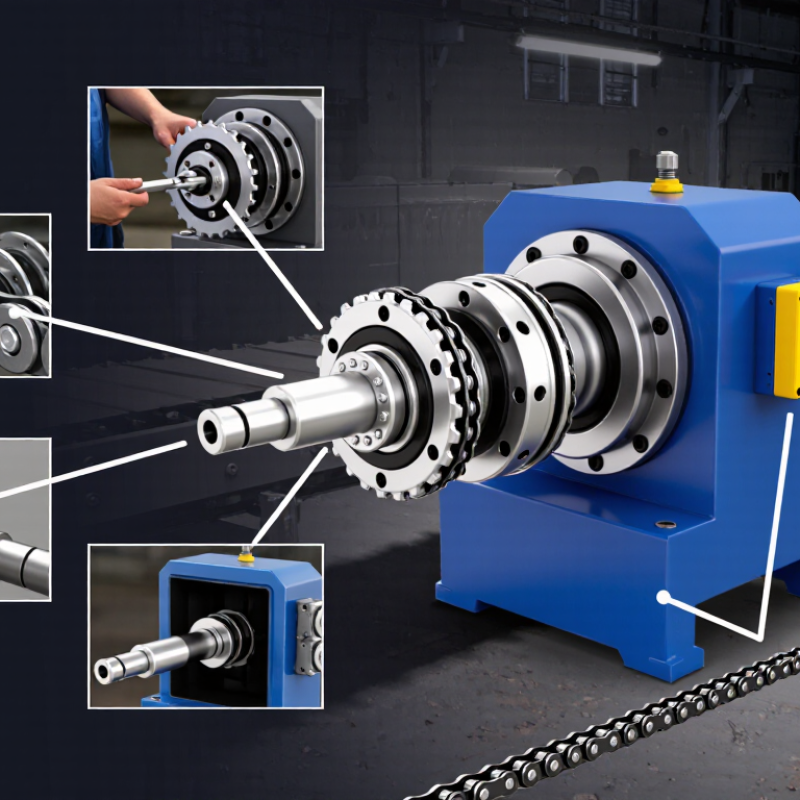
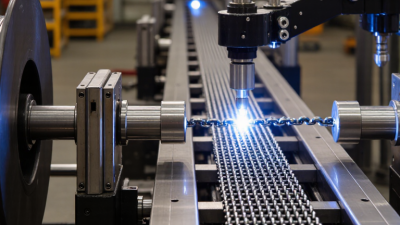
A Bismark chain coupling machine is specialized equipment for producing or assembling chain couplings. These couplings transfer rotary power between two shafts. They use paired sprockets, a roller chain, and often a protective cover. The machine helps position parts accurately, secure fasteners, and check assembly quality.
In practical workshops, operators may use it for sprocket fitting, chain installation, lubrication, and dimensional inspection. A reliable machine should maintain consistent shaft spacing and controlled assembly pressure.
Even a small alignment error can create vibration, noise, or premature wear. I have found that clear calibration records matter as much as machine speed. Fast output means little when rejected couplings increase maintenance costs. The term “Bismark” may describe a specific design or supplier classification, so technical documents should be checked carefully.
Tips: Confirm the coupling size range before purchase. Inspect the machine’s alignment guides and measuring tools. Ask for repeatability data, maintenance instructions, and operator training details. Test several coupling sizes with real materials, not only demonstration parts. Pay attention to guarding, emergency stops, and accessible lubrication points. A compact machine may save floor space, but cramped access can slow repairs. That trade-off deserves honest review.
Choosing a Bismark chain coupling machine should begin with your production requirements, not its advertised speed. Define the chain sizes, coupling dimensions, wire diameter, and required daily output. A machine designed for small couplings may struggle with thicker wire or continuous high-volume work. Measure your actual product range carefully. Guessing here can become expensive.
Check changeover time, feeding accuracy, and control flexibility. If your factory produces several coupling specifications, quick tooling changes can protect valuable production hours. Ask for sample runs using your material, then inspect pitch consistency, joint alignment, surface marks, and rejection rates. Experienced operators often notice problems that a specification sheet misses. Automation is useful, but only when it reduces handling and stabilizes quality. More automation is not always better.
Tips: Compare the machine’s rated output with your real operating speed, including setup and maintenance. Confirm access to wear parts, technical training, safety guards, and service documentation. Leave enough floor space for feeding, inspection, and safe operator movement. Record trial results before making a decision. A machine may look efficient during a short demonstration, yet perform differently after several hours. I have seen buyers focus too heavily on maximum speed and overlook changeover losses. That is an easy mistake. Also review energy use, noise, and cleaning requirements, because these daily details affect long-term reliability.
Machine capacity should match real production, not an impressive brochure number. Check maximum coupling diameter, shaft-bore range, chain pitch, fixture load, and continuous torque. A machine rated for 200 units per shift may deliver less with frequent changeovers. During factory evaluations, record cycle time with your largest and smallest coupling. That detail often exposes hidden limits.
Precision requires more than a tight positioning claim. Measure bore diameter, sprocket alignment, axial runout, and repeatability across several batches. Use calibrated gauges and keep the inspection method consistent. ISO 286-1 provides a recognized framework for dimensional tolerances, but the final tolerance must fit the coupling design and service conditions.
One overlooked fixture error can spoil good machining. It happens.
Automation should reduce variation, not merely add screens. Compare automatic loading, tool compensation, recipe control, barcode tracking, and alarm records.
The International Federation of Robotics reported 541,302 industrial robots were installed worldwide in 2023, showing how quickly automated production is expanding. Deloitte’s 2023 Smart Manufacturing and Operations Survey found that 86% of manufacturers viewed smart manufacturing as a major competitiveness driver within three years.
Still, automation can disappoint when operators cannot adjust recipes or recover from faults. Ask for a live demonstration using your components, then review five consecutive batches for capacity, precision, and downtime.
Choosing a Bismark Chain Coupling Machine in 2026 requires more than matching a price tag to production speed. Safety should be checked at the machine, not assumed from a brochure. Look for a fully enclosed chain area, a reachable emergency stop, overload protection, and clear lockout points. Guards must remain secure during vibration. Test the stop function with power isolated and documented. A quiet machine is not automatically a safe machine. I once underestimated loose guarding because the noise seemed minor; it later revealed poor alignment.
Compatibility begins with exact measurements. Confirm chain pitch, roller diameter, sprocket tooth profile, shaft diameter, bore tolerance, and required torque. Check whether the machine accepts your coupling size without improvised adapters. Those shortcuts can create uneven loading. Review motor voltage, control-system connections, installation space, and ambient temperature. Dust and washdown conditions may require different seals and enclosure protection.
Maintenance access matters every week. Grease points should be reachable without removing dangerous components. Inspect chain elongation, sprocket wear, shaft runout, and bolt tightness at scheduled intervals. Keep a simple service log with dates, readings, and replaced parts. Small details matter. Ask for operating limits, spare-part availability, training records, and a clear maintenance procedure. Independent inspection by a qualified technician can expose assumptions your purchasing team missed. There is always room to improve the checklist.
| Selection Factor | Practical Specification or Range | Why It Matters | How to Verify Before Purchase | Priority |
|---|---|---|---|---|
| Coupling size coverage | Select a working range that covers the required chain coupling pitch, sprocket outside diameter, bore size, and hub width, with approximately 10–20% capacity reserve. | A machine operating at its limit may suffer from poor alignment, overload, premature tool wear, or incomplete assembly. | Compare the machine’s dimensional drawings with approved coupling drawings and test the largest and smallest production parts. | Critical |
| Rated assembly force | The rated force should exceed the maximum measured insertion or pressing force by at least 25%, subject to the coupling manufacturer’s limits. | Adequate force reserve reduces stalled cycles and helps maintain repeatable seating without overloading the frame or tooling. | Request force–stroke curves, overload settings, and a sample run using the actual chain, sprockets, hubs, and lubrication condition. | Critical |
| Alignment and concentricity | Use guided fixtures, datum references, and measurable runout or concentricity limits defined by the coupling drawing. Do not rely on visual centering alone. | Misalignment can increase chain vibration, noise, wear, and load on connected shafts. | Check fixture repeatability with a dial indicator or calibrated gauge and review first-article inspection records. | Critical |
| Guarding and pinch-point protection | Provide fixed or interlocked guards around moving chains, sprockets, presses, clamps, and rotating shafts. Access doors should prevent operation when open. | Chain coupling assembly creates entanglement, crushing, and shearing hazards. | Inspect the risk assessment, safety circuit diagram, guard layout, and stop response during an on-site acceptance test. | Critical |
| Emergency stop and restart control | Include clearly marked emergency-stop devices, controlled restart after a stop, and protection against automatic restart after power recovery. | The operator must be able to stop hazardous motion quickly and safely. | Test every emergency stop, reset sequence, door switch, and power-failure recovery function with documented results. | Critical |
| Safety-rated control system | Use a documented safety relay or safety controller with monitored inputs and outputs appropriate to the machine risk assessment. | A standard programmable control circuit alone may not provide the required fault detection or safe-state behavior. | Request the safety validation file, circuit diagrams, diagnostic coverage information, and fault-response test records. | Critical |
| Tooling and fixture changeover | Prefer keyed, poka-yoke fixtures with repeatable locating features and documented changeover settings. | Correct changeover prevents incorrect coupling orientation, part mix-ups, and fixture-induced damage. | Measure changeover time, verify mistake-proofing, and run representative parts from each coupling size family. | High |
| Lubrication compatibility | The machine must tolerate the specified chain lubricant, grease, or oil without seal, hose, coating, sensor, or friction-material degradation. | Incorrect lubricant compatibility can cause swelling, leakage, contamination, or reduced coupling life. | Obtain material compatibility statements and confirm lubricant viscosity, application method, quantity, and cleaning requirements. | High |
| Electrical and pneumatic utilities | Confirm supply voltage and frequency, available short-circuit rating, compressed-air pressure and quality, exhaust needs, and connection standards. | Utility mismatch can cause unreliable sensors, slow actuators, nuisance trips, or unsafe motion. | Compare the utility schedule with the facility survey and verify performance at minimum and maximum operating conditions. | High |
| Inspection and traceability | Include presence checks, seating confirmation, force or position monitoring, and a record of part number, batch, result, and operator or station ID. | Traceability helps identify assembly defects and supports corrective action without relying only on final visual inspection. | Review data export formats, barcode or RFID options, reject handling, and audit-trail retention. | High |
| Maintenance access | Provide safe access to chain guides, bearings, sensors, clamps, filters, lubrication points, and wear components without dismantling major assemblies. | Good access reduces planned downtime and discourages unsafe maintenance practices. | Conduct a maintenance walk-through and confirm lockout points, access clearances, lifting provisions, and service instructions. | High |
| Preventive maintenance schedule | Define daily cleaning and inspection, weekly checks of fasteners and sensors, periodic lubrication, and condition-based replacement of wear parts. | A documented schedule improves availability and helps detect looseness, contamination, or abnormal wear early. | Require maintenance intervals, checklists, spare-part numbers, lubrication points, and recommended inspection limits. | High |
| Replacement parts availability | Prioritize standard bearings, sensors, seals, fittings, belts, and electrical components with documented specifications and local or regional support. | Long lead times for proprietary wear parts can extend downtime and increase lifecycle cost. | Ask for a recommended spare-parts list, lead times, obsolescence policy, and interchangeability details. | Medium |
| Cycle time and production capacity | Calculate capacity from the complete cycle, including loading, clamping, assembly, inspection, unloading, and changeover losses. | A short pressing stroke does not necessarily indicate high practical throughput. | Run a timed production trial with the target parts and record cycle time, first-pass yield, and minor stops. | Medium |
| Environmental suitability | Specify operating temperature, humidity, dust, oil mist, washdown exposure, noise limits, and corrosion-protection requirements for the installation area. | Sensors, controls, lubricants, and finishes may perform differently in dusty, wet, or chemically aggressive environments. | Compare enclosure ratings, surface treatments, drainage, filtration, and environmental test documentation with site conditions. | Medium |
| Documentation and training | Require manuals, electrical and pneumatic diagrams, risk assessment, spare-parts lists, calibration instructions, and operator and maintenance training. | Complete documentation supports safe operation, troubleshooting, audits, and future modifications. | Make document delivery and training completion part of the acceptance criteria. | Medium |
| Acceptance test criteria | Define measurable requirements for safety functions, assembly force, alignment, cycle time, inspection accuracy, uptime, noise, and first-pass yield before contract approval. | Clear acceptance criteria prevent disagreements and confirm that the machine is suitable for real production conditions. | Use a signed factory and site acceptance protocol based on actual parts, tooling, utilities, and production settings. | Critical |

How to Choose Bismark Chain Coupling Machine in 2026?
Choosing a Bismark chain coupling machine requires more than comparing purchase prices. Start with your production volume, coupling dimensions, material range, and required cycle time. A cheaper machine may demand frequent adjustments, costly downtime, or more operators. Request a complete quotation covering tooling, installation, training, shipping, maintenance, and spare parts. Ask suppliers to demonstrate sample production using your actual chain specifications. Small details matter.
Evaluate supplier reliability through documented factory experience, technician qualifications, inspection procedures, and customer references. A trustworthy supplier should explain tolerance control, safety features, delivery limits, and warranty conditions clearly. Check whether electrical components and replacement parts remain available after several years. Avoid vague promises. Written evidence is stronger than confident sales language.
Tips: Calculate total ownership cost over five years. Compare energy use, labor requirements, service visits, tooling life, and expected downtime. Record sample speed and defect rates during testing. Visit an operating installation if possible. Ask difficult questions, even repetitive ones. Long-term performance is rarely perfect, and my own evaluations have sometimes underestimated setup time. Leave room for maintenance delays and operator learning. A practical machine should remain stable during ordinary production, not only during a supervised demonstration.