Leave Your Message

Top 10 Types of Chopin Chain Weaving Machines for Buyers

A Chopin Chain Weaving Machine can support the production of narrow, chain-like textile structures for apparel, accessories, and technical applications. Yet the name alone does not reveal whether a model fits a buyer’s material, output, or workshop. Machine designs can differ in needle arrangement, working width, speed range, yarn compatibility, and control system. Small details matter. A guide to the top 10 types should explain these differences in practical terms, not treat every machine as interchangeable.

Buyers can compare options by considering the product they need, the yarns they plan to run, and the required production volume. A sample swatch can help assess stitch consistency, edge quality, and tension before a purchase. Ask suppliers for clear specifications, operating videos, spare-parts information, and service details. If possible, test the machine with your own yarn; catalogue figures do not tell the whole story. This overview will introduce common machine categories and their likely strengths, while noting where model-specific verification is essential. Some distinctions may overlap between manufacturers, so the labels should be treated as a starting point, not a guarantee. A careful buyer checks the actual configuration.
Top 10 Types of Chopin Chain Weaving Machines for Buyers

What Chopin Chain Weaving Machines Are and How They Work

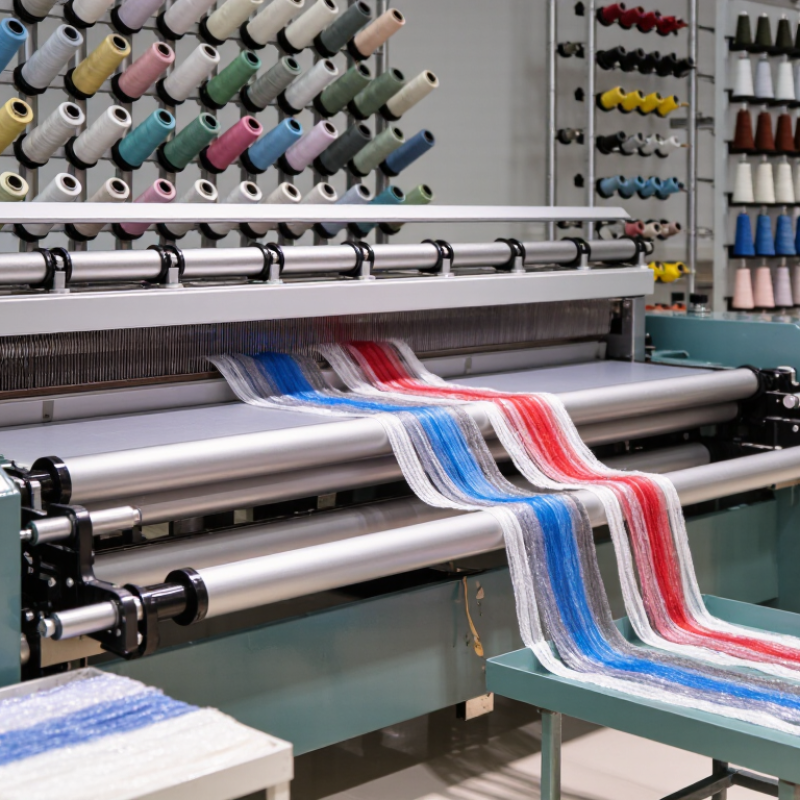
Chopin chain weaving machines produce narrow textile structures by forming repeated, linked yarn loops. They are suited to items such as cords, tapes, and decorative bands. Yarn feeds from packages through tension controls and guides, which position each strand at the forming area. Needles or other loop-forming parts then create the chain pattern, while a take-up system draws the finished fabric forward. The exact mechanism varies by machine design.

Watch the yarn path closely. Uneven tension can leave loops loose on one side and tight on the other. Operators typically check needle condition, guide alignment, and take-up speed before production. A sample run helps reveal skipped loops or inconsistent width. Small details matter. The term “Chopin chain weaving” may be used differently across suppliers, so buyers should confirm the machine’s structure and intended output. Ask for fabric samples, working speed under the required setup, and adjustment instructions. A machine’s advertised speed alone does not show how reliably it handles a particular yarn or pattern. Setup takes judgment, and early results may need correction.
Key Components and Chain-Weaving Processes

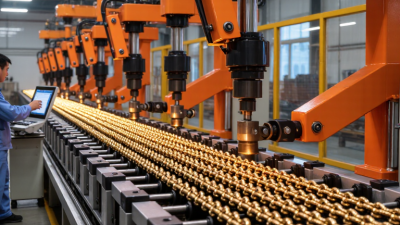
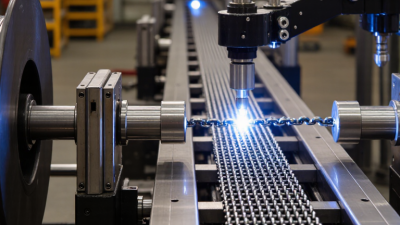
A Chopin chain-weaving machine relies on several parts working in close coordination. The creel holds wire or yarn spools, while guides direct each strand toward the weaving head. Tensioners help keep strands steady. Needles, hooks, or carriers interlace them into a repeating chain structure. The exact tooling varies with the machine design and the chain’s size. Small alignment errors can show up as uneven links or a loose edge.

The process begins with loading and threading the strands through guides and tension controls. The weaving head then moves them in a set sequence, forming connected loops as the material advances. A take-up mechanism draws the finished chain forward, and an operator checks its shape and consistency. It is a precise rhythm, but not a perfect one. Changes in spool tension or material thickness may require adjustment. Buyers should ask how quickly the machine can be rethreaded, how tension is controlled, and which chain sizes the tooling supports. Watching a sample run can reveal details that a specification sheet may miss.

Ten Main Types of Chopin Chain Weaving Machines

Ten Main Types of Chopin Chain Weaving Machines

Buyers often compare ten useful types of Chopin chain weaving machines, although some categories overlap. Hand-operated models suit small workshops and simple production. Mechanical machines use gears and cams to maintain steady movement. Electronic pattern-controlled models allow operators to adjust stitch sequences with programmed settings. Single-needle-bar machines handle straightforward chain structures. Multi-needle-bar machines can produce more complex patterns, but need careful setup.

Narrow-fabric machines are designed for ribbons, trims, and similar products. Elastic-band machines work with stretch yarns and require controlled tension. Lace and ornamental models create decorative structures for garments or home textiles. High-speed machines support larger production runs, though speed alone does not guarantee consistent fabric. Sample-making machines help teams test yarns, widths, and patterns before committing to longer runs. Small details matter.

These labels are not always used consistently, which can confuse a first-time buyer. Ask suppliers to demonstrate the actual fabric, not just show a machine specification sheet. Check the working width, yarn compatibility, pattern range, and adjustment process. Bring a sample yarn if possible. A machine may appear suitable on paper, yet produce uneven edges with a particular yarn. That happens. Operators should also inspect guarding, cleaning access, and routine maintenance requirements before choosing a production setup.

Top 10 Types of Chopin Chain Weaving Machines for Buyers - Ten Main Types of Chopin Chain Weaving Machines

The categories below are organized by the chain pattern or construction a machine is configured to produce. Actual capabilities depend on the machine setup, tooling, wire specifications, and finishing equipment.

No. Machine Type / Chain Pattern How the Chain Is Constructed Typical Uses Buyer Checks
1 Cable (Anchor) Chain Machine Forms and interlinks alternating oval or round links, creating a simple, open-link chain pattern. Necklaces, bracelets, and general-purpose chain products. Confirm the supported link dimensions, wire profiles, and whether link closing or soldering is included in the production line.
2 Curb Chain Machine Forms interlocking links that are twisted or flattened so the finished chain lies relatively flat. Bracelets, necklaces, and heavier chain styles. Check whether flattening is integrated or requires a separate rolling operation, and verify the available link-width range.
3 Figaro Chain Machine Configuration Produces a repeating link sequence, commonly combining shorter links with a longer link; the pattern requires controlled sequencing. Decorative necklaces and bracelets. Ask how pattern length is set, how repeat consistency is maintained, and whether different link sizes need separate tooling.
4 Rope Chain Machine Configuration Builds a twisted, rope-like appearance from closely arranged links or chain elements; production may involve more than one forming or assembly stage. Textured necklaces and bracelets. Clarify which stages the quoted machine performs and whether twisting, joining, and finishing equipment are separate.
5 Ball Chain Machine Forms small metal spheres or rounded elements and connects them with short links or connectors. Light-duty necklaces, tags, and decorative applications. Check ball diameter, connector style, feed consistency, and whether ball forming is part of the machine or a separate process.
6 Snake Chain Machine Arranges closely fitted links or shaped elements to create a smooth, flexible chain with a nearly continuous surface. Smooth-finish necklaces and bracelets. Review flexibility, surface uniformity, and the chain’s resistance to kinking under the intended handling conditions.
7 Box Chain Machine Forms square-looking links that interlock to create a compact chain with a more geometric appearance. Fine necklaces, pendants, and selected bracelet styles. Verify the machine’s capability for consistent link shape and ask about tooling changes for different chain sizes.
8 Wheat (Spiga) Chain Machine Configuration Interweaves or assembles links in a repeating pattern that gives the finished chain a braided, wheat-like look. Decorative necklaces and bracelets. Confirm the number of forming or assembly stages, achievable pattern density, and setup requirements for the selected design.
9 Byzantine Chain Assembly Configuration Connects rings in a dense, repeating interwoven structure; production often requires specialized assembly and may include manual or additional automated steps. Intricate bracelets and statement necklaces. Establish whether the equipment automates ring forming, chain assembly, or both, and request a sample made to the intended pattern.
10 Hollow Chain Machine Configuration Forms chain structures with a hollow interior, often using shaped or tubular material and specialized forming methods. Larger-looking, lightweight chain designs. Check compatible material forms, seam or joint requirements, deformation control, and the finishing steps needed for the target product.

Before purchasing, compare sample quality, supported materials, tooling costs, changeover needs, operator training, maintenance access, and the complete production process—not just the machine’s stated output rate.

How the Machine Types Differ in Design and Use

Chopin chain weaving machines differ by motion, feed system, and the link geometry they can hold. A basic single-head unit suits short runs and frequent pattern changes, but needs more operator attention. Cam-driven machines repeat one link shape reliably. CNC-controlled models allow pitch and stitch adjustments, making them useful for mixed orders. Multi-head designs raise output, though one setup error can affect several lanes at once. Fit matters.

Wire-fed or strip-fed machines handle different materials and link profiles. Integrated forming-and-joining units reduce manual handling; separate forming and joining stations offer easier process checks. Hollow-link configurations can reduce material use, but their thin walls demand careful tension control. High-speed models are not automatically better. Vibration, feed consistency, and scrap rates matter at the workbench.

ITMF’s 46th International Textile Machinery Shipment Statistics reported a 28% year-on-year decline in shuttleless-loom shipments in 2023. That report tracks textile looms, not chain machines, so it is only a cautious signal about equipment investment. Buyers should compare usable output, changeover time, and rejected links using the same wire size and pattern. A short production trial often reveals what a specification sheet misses. I would not choose by speed alone.

How Buyers Evaluate and Select a Machine

When evaluating a Chopin chain weaving machine, match its working range to the chain you plan to make. Check supported wire diameters, link dimensions, and pattern options against real production samples. A machine that handles your thinnest wire may not produce your preferred thicker chain consistently. Ask for a trial using your material, then inspect link shape, tension, and surface marks under good light. A fast machine can still be the wrong choice.

Tips: Bring a sample or clear drawing to the supplier. Request a short run at your target speed. Note setup time, scrap, and how easily an operator corrects uneven links.

Compare usable output, not only the advertised maximum speed. Ask how often the machine needs adjustment and which wear parts require routine replacement. Controls should be clear enough for operators to change settings without guesswork. Check guarding, emergency stops, noise, and access for cleaning before installation. Also confirm training, spare-part availability, and service response times in writing. These details affect daily uptime. It is easy to overvalue a long feature list; in practice, a stable setup and repeatable links may matter more. Leave room for uncertainty: actual output can change with wire quality, operator skill, and the chain pattern.