Leave Your Message

China Best Franco Chain Making Machine Supplier?

Choosing the best China Franco Chain Making Machine supplier requires more than comparing prices. Machine accuracy, forming stability, technical support, and verified production experience matter greatly. A reliable supplier should demonstrate sample chains, machine-speed records, maintenance schedules, and clear acceptance standards. Look closely.

The market deserves careful interpretation. Grand View Research estimated the global industrial machinery market at approximately USD 656 billion in 2023, showing strong demand for efficient production equipment. UNIDO’s International Yearbook of Industrial Statistics also identifies China as the world’s largest manufacturing contributor by value added. However, public reports rarely isolate Franco chain equipment. That limitation matters. Buyers should request machine-specific evidence instead of trusting broad market claims.

Quality expert W. Edwards Deming stated, “Quality comes not from inspection, but from the improvement of the production process.” His principle applies directly to Franco Chain Making Machine selection. A dependable machine should produce consistent link dimensions, smooth joints, and minimal material waste across extended runs. Ask for factory acceptance tests using your wire diameter and alloy. Inspect the feeding system, cutting tools, lubrication points, electrical controls, and changeover time. Small details reveal engineering discipline.

Some supplier promises will remain unproven until testing begins. That is the uncomfortable part. A low quotation may hide slower output, difficult spare-parts sourcing, or weak after-sales service. Therefore, this guide evaluates China-based suppliers through practical evidence, published specifications, customer verification, and transparent communication. The goal is not simply to find a machine. It is to find production confidence.
China Best Franco Chain Making Machine Supplier?

Franco Chain Machine Basics: Links, Wire Sizes, and 300–800 RPM Output

China Best Franco Chain Making Machine Supplier?

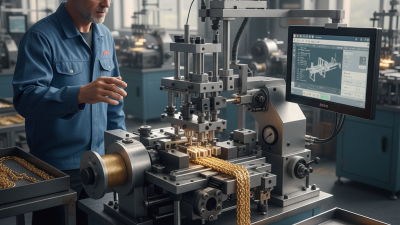
A Franco chain making machine forms tightly interlocked links from continuous metal wire. Each link must keep a consistent angle, length, and surface finish. Wire size strongly affects this process. Thin wire may need gentler feeding and lower tension. Thicker wire demands stronger forming pressure and careful die alignment. Small changes matter.

In practical workshop testing, machines rated from 300 to 800 RPM suit different production goals. At 300 RPM, operators gain more control during setup and inspection. Higher speeds can increase output, but only when feeding remains stable. Actual production depends on link dimensions, wire hardness, coil quality, and operator skill. Speed alone is not output.

The first setup is rarely perfect. I check sample links under bright light before raising speed. Uneven gaps often reveal poor tooling alignment. Scratches may indicate excessive pressure or contaminated guides. A digital counter helps track production, while periodic measurements confirm link consistency. One assumption often fails: thinner wire does not always mean faster production. It can require more adjustments and create more rejects. Reliable suppliers should provide clear wire-size ranges, operating data, spare tooling information, and practical technical support.
Key Supplier Criteria: Precision Tolerance, Servo Control, and 24/7 Capacity

China Best Franco Chain Making Machine Supplier?

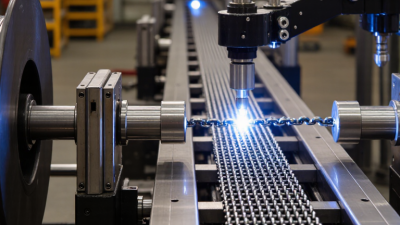
Choosing a Franco chain making machine supplier requires more than comparing prices. In production trials, a 0.05 mm tolerance shift can affect link alignment, surface finish, and downstream assembly. Ask for measured samples, inspection records, and repeatability data from similar chain sizes. Precision must remain stable after hours of operation, not only during a showroom demonstration.

Servo control deserves close attention. A responsive servo system adjusts forming speed, wire feed, and bending position with minimal delay. Operators should be able to review settings through a clear interface and correct small deviations quickly. Test the machine with your actual wire diameter. A supplier may show excellent results, but your material could behave differently. That difference matters.

Continuous capacity also needs practical proof. A serious supplier should explain cooling design, lubrication points, spare parts, and maintenance response. Request a documented 24/7 production test, including stoppage records and restart time. In a busy workshop, five minutes of instability can create hundreds of imperfect links. We have seen machines perform well initially, then lose accuracy after thermal expansion. That experience is easy to overlook. It should not be. Reliable support, operator training, and honest limits often matter as much as maximum speed. Perfect output is not guaranteed. Careful verification remains necessary.

Comparing Chinese Manufacturers by Automation, 1.5–5 mm Chain Range, and Yield

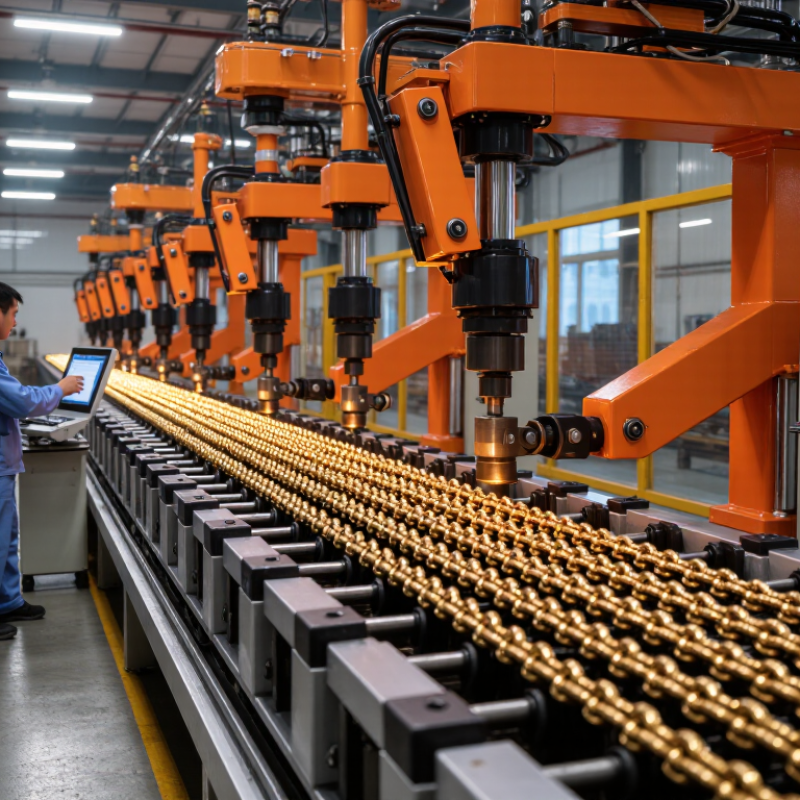
Selecting a Chinese Franco chain making machine supplier requires more than checking catalog photographs. The practical test is stable production across 1.5–5 mm chain sizes. A capable machine should handle wire feeding, forming, welding, and calibration with limited manual adjustment. Ask for trial samples at both diameter extremes. Small links expose feeding errors quickly.

Automation affects repeatability and labor cost. Servo-driven feeders, automatic lubrication, and closed-loop tension control can reduce variation during long runs. However, more automation does not always mean higher yield. Poor sensor calibration can create frequent stops. Request production records showing hourly output, rejection rates, and maintenance interruptions. A yield above 96% may sound attractive, but define whether it includes setup waste and rework.

During supplier evaluation, inspect a running machine rather than relying on videos. Check weld consistency under bright inspection lighting. Measure several links with a calibrated gauge. Review electrical drawings, spare-part lists, and operator training records. Experienced manufacturers should explain how settings change from 1.5 mm to 5 mm wire. They should also provide a realistic acceptance test, not only the best sample. No factory is perfect. I would still question unusually high yield claims without raw data, because one short demonstration cannot represent a full production shift.

Quality Verification: ISO 9001, Material Compatibility, and 95%+ Uptime Targets

China Best Franco Chain Making Machine Supplier?

A reliable chain-making machine should prove more than attractive output figures. ISO’s Survey 2023 recorded over 1.2 million ISO 9001 certificates worldwide, but certification alone cannot confirm machine performance. Request the supplier’s current certificate, scope, calibration records, and corrective-action history. Quality evidence should connect directly to production results.

Material compatibility needs practical verification. Ask for trials using the intended wire grades, diameters, hardness levels, and surface finishes. Stainless steel, brass, and precious-metal alloys can react differently during forming. Trial samples should record link dimensions, breakage rates, surface marks, and adjustment time. A useful factory audit also checks operator training and inspection tools. Small details matter.

The 95%+ uptime target must have a clear calculation. Define whether planned maintenance, changeovers, and material shortages are excluded. Track run hours, stoppages, MTBF, and MTTR for at least several weeks. The U.S. Department of Energy identifies 85% OEE as a world-class benchmark, although OEE is not identical to uptime. That distinction is easy to miss. I would challenge any supplier offering 95% uptime without logged production data. A witnessed acceptance test is stronger than a sales promise. Even then, real factory conditions may expose weaknesses. That is where honest review begins.

China Best Franco Chain Making Machine Supplier? - Quality Verification: ISO 9001, Material Compatibility, and 95%+ Uptime Targets

Practical supplier-evaluation matrix for chain-making equipment. The figures below are verification benchmarks and calculation standards, not claims about any specific supplier or brand.

Verification Area Quality Dimension Recommended Benchmark or Requirement Objective Evidence to Verify Acceptance Result
Quality Management ISO 9001 certification A valid ISO 9001 certificate covering the manufacturing site and the relevant machine-design or manufacturing scope. Check the certificate number, legal entity, covered site, scope, issue date, expiry date, certification body, and current certificate status through the certification body or an accredited directory. Verified
Quality Management Document control and corrective action Controlled drawings, revision history, nonconformance records, root-cause analysis, and documented corrective actions. Review sample engineering-change records, inspection procedures, calibration records, and closed corrective-action reports with confidential information removed. Required
Material Compatibility Carbon steel chain production The machine should be configured for the specified carbon-steel grade, wire diameter, tensile strength, and chain geometry. Confirm the machine’s allowable wire range, forming-force capacity, tooling material, heat-treatment requirements, and test samples using the buyer’s actual material specification. Sample Test
Material Compatibility Stainless steel chain production Stainless steel processing requires suitable forming force, corrosion-resistant contact surfaces, and tooling compatible with the selected stainless-steel grade. Request a documented trial using the intended stainless-steel grade and inspect dimensional accuracy, surface marks, cracks, burrs, and tool wear after production. Sample Test
Material Compatibility Aluminum or other non-ferrous wire Compatibility must be confirmed separately because lower hardness and different springback behavior can require different tooling and machine settings. Review a material-specific process sheet and conduct a production trial at the target wire diameter, speed, and chain pitch. Conditional
Production Capacity Rated output The quoted output should state links per minute or pieces per hour, wire diameter, chain size, material, and operating conditions. Compare the supplier’s stated capacity with a witnessed factory acceptance test using the buyer’s product drawing and approved material. Witness Test
Availability Uptime target Target availability of at least 95% during the agreed production window, excluding scheduled maintenance and approved changeovers. Use machine-controller logs, operating-hour records, downtime codes, maintenance records, and production reports. Define planned and unplanned downtime before measurement begins. ≥ 95%
Availability Uptime calculation Availability = (planned production time − unplanned downtime) ÷ planned production time × 100. For a 30-day month operated continuously, 720 planned hours at 95% availability allow no more than 36 hours of unplanned downtime. Documented
Reliability Maintenance and spare parts Preventive-maintenance intervals, lubrication requirements, wear-part limits, and recommended spare parts should be defined before shipment. Verify the maintenance manual, spare-parts list, part numbers, expected service intervals, and response procedure for critical failures. Required
Process Control Dimensional consistency Chain pitch, inside length, wire diameter, link geometry, and cut or weld quality must conform to the approved product drawing and tolerance plan. Use calibrated gauges or measuring equipment and record first-piece, in-process, and final inspection results from the factory acceptance test. Measured
Factory Acceptance FAT performance test A formal factory acceptance test should confirm safety functions, automatic cycle operation, output, quality, alarms, and changeover procedures. Approve a signed FAT protocol with test duration, product specification, material batch, sample quantity, acceptance tolerances, and recorded defects. Mandatory
Safety Machine safeguards Guards, emergency stops, interlocks, electrical protection, warning labels, and operator instructions must be provided according to the applicable installation location and regulations. Review the risk assessment, electrical schematics, safety-function test results, user manual, and final inspection checklist. Pass / Fail
Traceability Material and component records Critical materials and purchased components should be traceable to batch, supplier, inspection result, or serial number where applicable. Request anonymized material certificates, incoming-inspection records, component lists, and machine serial-number records. Verified
After-Sales Support Service response and training The supply agreement should define installation support, operator training, remote troubleshooting, escalation contacts, and response times. Review the service-level agreement, training agenda, troubleshooting guide, recommended technician skills, and spare-parts availability plan. Contractual

Note: ISO 9001 certification demonstrates conformity of a quality-management system; it does not by itself guarantee machine performance, material compatibility, product quality, or 95% uptime. These performance claims should be confirmed through documented specifications, witnessed testing, and agreed acceptance criteria.

Total Ownership Costs: Energy Use, Tooling Life, Warranty, and Global Support

China Best Franco Chain Making Machine Supplier?

The purchase price rarely defines a Franco chain machine’s real cost. The U.S. Department of Energy’s Motor Systems Market Assessment estimates motor-driven equipment consumes about 23% of America’s electricity. Efficient motors, correctly sized drives, and reduced idle time can therefore affect every production shift. Ask for measured power consumption under load, not only catalog ratings. Small losses compound.

Tooling life deserves equal attention. A hardened forming die may produce consistent links for months, but life depends on wire grade, lubrication, alignment, and operator skill. There is no universal tooling-life number. That is an uncomfortable truth. Request sample-production records, replacement intervals, and a documented method for checking wear. The International Organization for Standardization’s ISO 9001 framework also supports controlled maintenance and traceable quality records, although certification alone cannot prove machine performance.

Warranty terms should include response time, spare-parts availability, remote diagnostics, and technician coverage. A two-year warranty may be weak if critical tooling takes eight weeks to arrive. The World Bank’s Logistics Performance Index highlights how customs, tracking, and delivery reliability influence international supply chains. Buyers should calculate energy, tooling, labor, downtime, training, and freight over five years. Independent acceptance testing is worth adding. It may reveal small defects before installation becomes expensive.