2026 Top Box Chain Making Machine Buying Guide
In 2026, buying a Box Chain Making Machine requires more than comparing catalog prices. Jewelry workshops now expect stable output, precise links, and manageable energy use. A suitable machine should form consistent box links without damaging wire surfaces. It must also match your metal type, wire diameter, and planned production volume. Small differences matter. A 0.1-millimeter setting error can affect polishing, soldering, and final fit.
Experienced buyers should inspect the complete working process, not only the machine body. Ask suppliers for sample chains made with your actual wire. Check link geometry under magnification. Listen for irregular noise during continuous operation. Review setup time, tooling changes, lubrication points, and operator training. A clear warranty, responsive technical support, and documented spare-parts availability show stronger supplier reliability. Independent certifications and transparent factory information add useful confidence, although paperwork alone cannot prove performance.
This guide explains the main specifications, machine structures, control systems, and purchasing risks to consider. It compares manual adjustment with automated control and examines how speed affects quality. It also discusses installation space, maintenance routines, safety protection, and long-term operating costs. The cheapest option may become expensive after repeated downtime. No checklist is perfect. Your product design, workforce, and workshop conditions still shape the final decision. Use measured samples, realistic production data, and written quotations before committing. With careful testing and practical questions, buyers can choose equipment that supports consistent craftsmanship through 2026 and beyond.
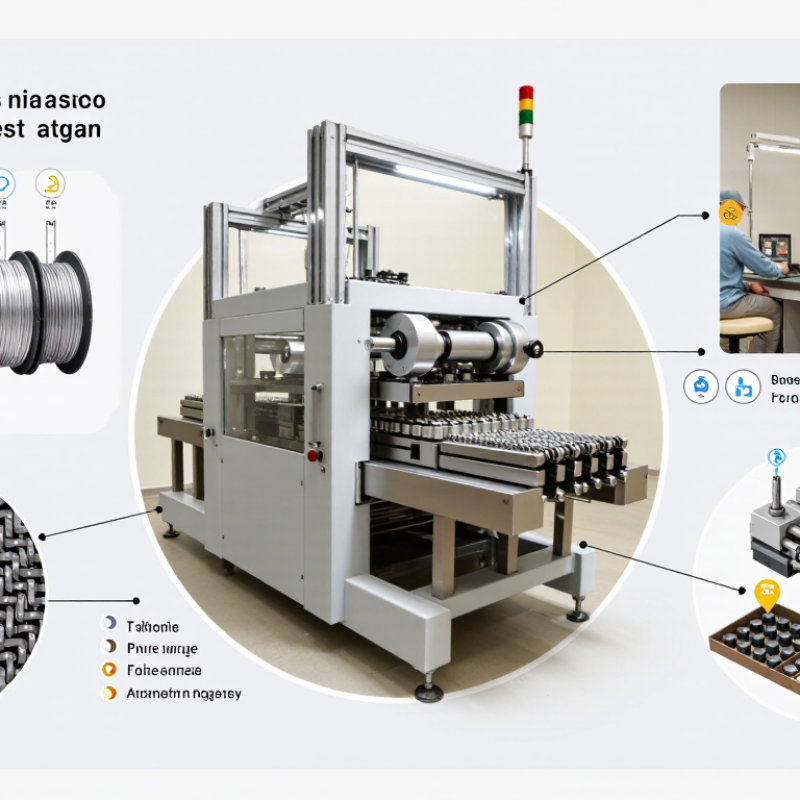
Box Chain Machine Basics: Wire Sizes, Link Geometry, and 2026 Standards
A box chain machine forms square links from continuous wire, then closes and aligns them in sequence. Wire diameter controls nearly everything: feed tension, mandrel clearance, weld stability, and finished flexibility. For fine jewelry, buyers often test approximately 0.15–0.40 mm wire. Heavier decorative chains may require 0.50–1.00 mm, but each range demands different tooling. Small errors become visible quickly.
Measure the link, not only the wire.
Record outside length, width, corner radius, and pitch. A tight corner creates a crisp box profile, while excessive radius produces a softer appearance. The International Organization for Standardization identifies fineness requirements in ISO 9202:2019, so gold and silver processing should match verified alloy data.
The World Gold Council reported 4,974.5 tonnes of total gold demand in 2024, showing why material control remains commercially important. That figure does not prove every machine needs higher speed. It suggests consistency deserves equal attention.
For 2026 purchasing, request documented tests for dimensional repeatability, guarding, electrical safety, and traceable maintenance records. Check whether the supplier references current ISO or applicable national requirements, rather than accepting “2026 compliant” as a complete claim.
Run at least three wire sizes before ordering. A machine that performs beautifully on 0.30 mm wire may struggle at 0.20 mm. This is where many demonstrations feel incomplete.
Inspect ten consecutive links under magnification, measure pitch variation, and test the chain after polishing. A perfect sample is not enough.
Compare Output: 120–300 Links/Min, ±0.02 mm Tolerance, and OEE
Buying a top box chain making machine requires more than reading its maximum speed. A claimed output of 300 links per minute may fall below 220 during wire changes, die adjustments, or quality checks. Machines rated at 120–180 links per minute often provide steadier production for mixed orders. Measure completed links, not theoretical strokes.
Tolerance matters at the forming point. A ±0.02 mm specification can improve box alignment, solder preparation, and finishing consistency. However, request measurement conditions, sampling frequency, and gauge accuracy. Small details matter. ISO 22400-2 defines OEE through availability, performance, and quality. Common manufacturing benchmarks place world-class OEE near 85%, while many plants operate substantially lower. The 2024 World Economic Forum Global Lighthouse Network report also documents productivity gains above 30% in selected smart factories, but those results are not automatic. They depend on maintenance discipline, operator training, and reliable data collection.
For comparison, calculate OEE from one full shift. Record planned time, downtime minutes, rejected links, and actual cycle speed. A 240-link-per-minute line with 90% availability, 92% performance, and 98% quality reaches about 81% OEE. That may outperform a faster machine with unstable feeding. I would also test a ten-minute run after warm-up. Real wire behavior can disappoint. Ask for repeatability records, noise readings, spare-part lead times, and adjustment logs before approving the purchase.
Assess Machine Types: 0.3–1.2 mm Wire, Servo Drives, and Automation
When buying a box chain making machine in 2026, start with the wire range. A 0.3–1.2 mm machine should maintain stable tension across thin and medium wire. Thin wire exposes poor alignment quickly. Watch the payoff unit, forming dies, and wire guides during a demonstration. Ask for sample chains at several diameters, not only the easiest size.
Servo drives improve control over speed, position, and link length. They also support faster adjustments when changing chain patterns. A responsive drive can reduce uneven links and surface marks. However, servo systems do not fix worn dies or weak mechanical frames. Inspect acceleration settings, emergency stops, guarding, and access for routine maintenance. The control screen should show useful production data without confusing menus.
Automation can include automatic feeding, length monitoring, fault alerts, and collection systems. These features may reduce operator fatigue and improve repeatability. They also increase setup demands. I once underestimated changeover time because the brochure showed only continuous production. That choice was easy to get wrong. Measure real setup time with your own wire and chain design. Check whether operators can adjust tension safely and whether replacement tooling is readily available. A small trial often reveals more than a polished specification sheet.
2026 Top Box Chain Making Machine Buying Guide
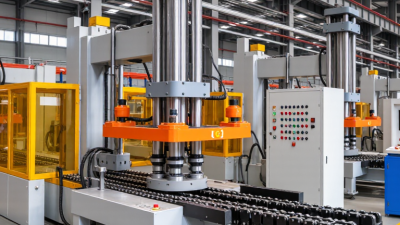
Machine capability by wire diameter, drive architecture, and automation level
How to read this chart: The bands show typical procurement ranges for box chain machines handling round wire. Fine-wire machines are commonly selected for approximately 0.30–0.60 mm wire, general-purpose systems for about 0.50–0.90 mm, and heavy-duty systems for approximately 0.80–1.20 mm. Actual limits depend on material, chain pitch, tooling, and forming force.
Buying guidance: Servo-driven machines provide more precise control of wire feed, pitch, and forming timing than fixed mechanical drives. Automated lines may add wire payoff, straightening, cutting, transfer, inspection, and collection modules, reducing manual handling while increasing integration requirements.
Calculate ROI: Energy, Tooling, Warranty, and 3-Year Cost per Meter
2026 Top Box Chain Making Machine Buying Guide
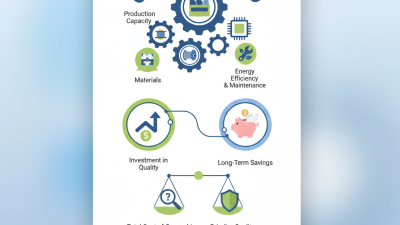
A low purchase price can hide a costly meter. Build a three-year model before comparing quotations. Use the U.S. Energy Information Administration’s Electric Power Monthly for local industrial electricity rates. At $0.11 per kWh, a 12 kW machine running 4,000 hours yearly at 65% load consumes about 93,600 kWh in three years. Energy alone costs $10,296. If output reaches 2,000 meters hourly, energy adds about $0.00086 per meter. That number looks small. Waste and stoppages can change it quickly.
Add tooling, planned maintenance, and warranty exposure. A forming die costing $4,500 and lasting 2.5 million meters adds $0.0018 per meter. Include spare cutters, setup scrap, and sharpening labor. PMMI’s 2024 State of the Industry reporting emphasizes automation, uptime, and labor efficiency in packaging machinery purchasing. Ask for documented cycle data, not optimistic samples. Warranty length matters, but response time matters more. Price one unplanned service day using your actual contribution margin. The U.S. Department of Energy’s industrial efficiency guidance also supports measuring real load profiles instead of relying on rated motor power. My weak point is often the scrap estimate. It deserves a conservative sensitivity test. Calculate three-year cost per meter as purchase price, energy, tooling, service, and downtime, minus residual value, divided by saleable meters.







 Lily
Lily Jason wong