
Leave Your Message
China’s machinery sector is gaining attention as manufacturers modernize forging, forming, and chain-production lines. This article examines China’s Top 10 Automatic Chain Hammer Machine Manufacturers through practical and measurable criteria. The focus includes machine stability, production capacity, control systems, safety design, spare-parts support, and export experience.
Industry reports provide useful context. The International Federation of Robotics reported more than 500,000 industrial robots installed worldwide in 2023. This trend reflects wider factory investment in repeatable automation and reduced manual handling. The China Machine Tool Industry Association also continues to highlight digitalization, precision manufacturing, and intelligent production as major industry directions. These developments matter because an Automatic Chain Hammer Machine must deliver consistent impact energy, chain pitch accuracy, and reliable cycle timing.
A serious comparison cannot rely on polished factory photographs alone. Operators should inspect ram movement, die alignment, PLC accessibility, guarding, lubrication points, and emergency-stop response. Maintenance records reveal more than brochures. Buyers should also verify sample-chain quality under real production conditions. The manufacturers in this guide are considered from that practical perspective, alongside technical documentation and market visibility. Yet no ranking is perfect. Product specifications can change, and some supplier information remains difficult to verify publicly. That limitation deserves attention. Readers should request factory audits, test reports, references, and after-sales commitments before purchasing. A capable supplier should explain how its machine performs beside a hot die, an oil-lubricated linkage, and a demanding operator shift. That is where marketing claims meet manufacturing reality.
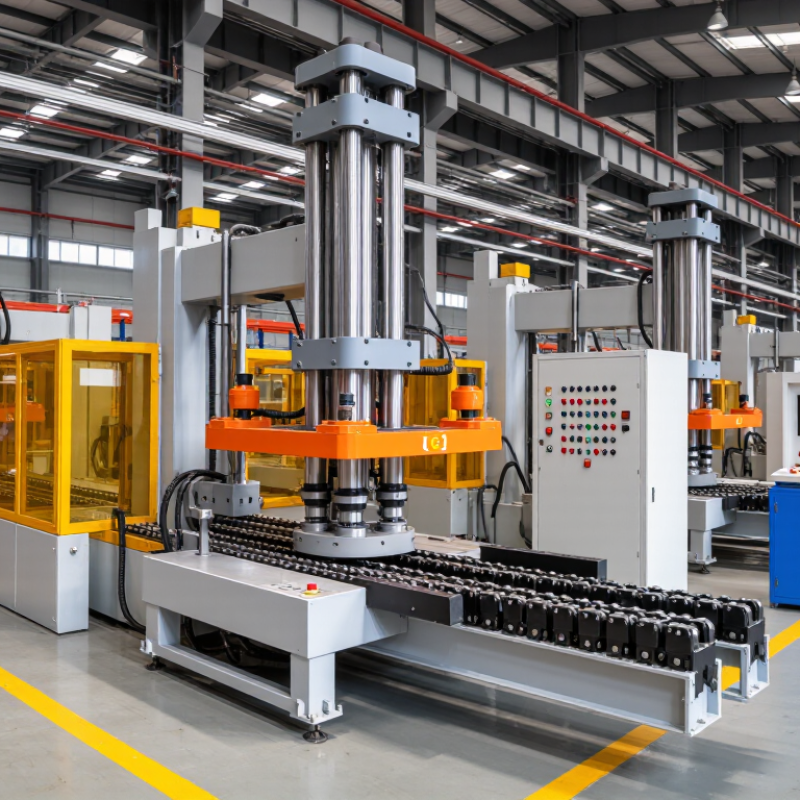
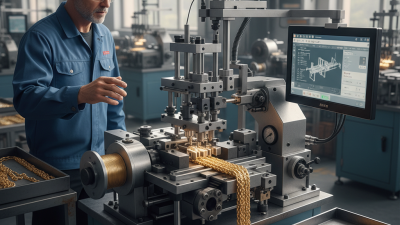
An automatic chain hammer machine forms and closes metal chain links with limited manual handling. The process usually includes wire feeding, cutting, bending, hammering, and link alignment. Some models also integrate heating or welding units. The exact configuration varies by chain size, material, and required strength. The term is not perfectly standardized. Buyers should inspect the machine’s process diagram before comparing specifications.
A reliable unit controls stroke frequency, feed length, and hammer pressure through sensors and programmable settings. Operators still need to check die wear, link dimensions, surface cracks, and lubrication. Small errors can multiply across thousands of links. ISO 606 provides dimensional guidance for many roller and bush chains, although lifting chains may follow different standards. The International Federation of Robotics reported 541,302 industrial robots were installed worldwide in 2023. That figure reflects a wider shift toward measurable automation, not proof that every chain process should be fully automated. A 2024 manufacturing outlook from Deloitte also identified labor availability and production consistency as major automation drivers. These findings support automated equipment, but they do not replace practical trials. A sample run should test speed, noise, heat control, rejection rates, and maintenance access. Real workshop conditions matter. A machine that looks efficient on paper may perform poorly with inconsistent wire.
Manufacturer-Neutral Technical Reference for Automatic Chain Hammer Machines
| No. | Data Dimension | Typical Technical Data | Description | Practical Selection Point |
|---|---|---|---|---|
| 1 | Machine Definition | Automated forging equipment for chain-link forming | An automatic chain hammer machine uses repeated powered impacts to shape heated steel rod or bar into chain links, while feeding, bending, forging and sequencing operations are coordinated automatically. | Confirm whether the equipment is designed for chain-link forging, link welding, or both, because these are different production processes. |
| 2 | Compatible Chain Diameter | Approximately 6–30 mm for common industrial models | The workable diameter depends on hammer energy, die geometry, material grade, heating temperature and the required link dimensions. | Select a machine according to the smallest and largest chain diameter required, rather than using only the maximum advertised size. |
| 3 | Hammer Energy | Approximately 0.5–16 kJ per blow | Hammer energy indicates the impact capacity available for plastic deformation. Larger chain sections generally require higher energy and stronger dies. | Compare rated energy under the same test conditions and verify the permitted material, section size and operating frequency. |
| 4 | Impact Frequency | Approximately 60–180 blows per minute | Impact frequency affects output rate, deformation consistency, die temperature and the time available for material handling between operations. | A higher frequency is not always better; match it to heating capacity, material flow and the required forging cycle. |
| 5 | Ram Stroke | Approximately 80–300 mm, depending on machine design | Ram stroke is the distance traveled by the hammering element. It influences impact velocity, forming clearance and the available working envelope. | Check stroke adjustment and die-space dimensions when producing different link sizes or shapes. |
| 6 | Drive Motor Capacity | Approximately 5.5–45 kW for common automatic configurations | Motor capacity supports the hammer drive, feeding system, link-forming mechanism, lubrication system and control equipment. | Verify the complete installed load, rated voltage, frequency, phase configuration and starting-current requirements. |
| 7 | Production Capacity | Approximately 300–1,500 links per hour | Actual output varies with chain diameter, link length, material heating time, forging strokes, operator intervention and quality inspection requirements. | Request a capacity test using the exact raw material, link dimensions and production sequence required by the buyer. |
| 8 | Suitable Materials | Low-carbon steel, medium-carbon steel and alloy steel, subject to testing | Hot forging performance depends on the material's chemical composition, hot-working range, diameter and required mechanical properties. | Confirm the material grade, heating temperature range and post-forging heat-treatment requirements before ordering. |
| 9 | Automation and Controls | PLC control, sensor monitoring, automatic feeding and cycle sequencing | Automation can coordinate material feeding, heating transfer, link positioning, hammer operation, counting and fault alarms. | Check recipe storage, emergency-stop functions, sensor availability, fault diagnostics and compatibility with factory automation systems. |
| 10 | Safety and Maintenance | Guarding, interlocks, lubrication, die inspection and vibration control | Because forging hammers generate impact, heat, noise and vibration, safe guarding and scheduled maintenance are essential for reliable operation. | Evaluate guarding, noise protection, foundation requirements, spare-part availability, lubrication access and maintenance documentation. |
Note: The technical figures are indicative ranges for manufacturer-neutral comparison. Actual specifications vary by machine structure, chain size, material grade, tooling and production process. Final values should be confirmed through technical drawings, sample testing and the machine supplier's official specifications.



 Lily
Lily Jason wong