Leave Your Message

Why Choose a Ball Chain Coupling Machine?

Why Choose a Ball Chain Coupling Machine?

Manufacturers are under pressure to produce faster, cleaner, and more consistently. The International Federation of Robotics reported 541,302 industrial robots were installed worldwide in 2023, a 10% annual increase. This growth signals a clear shift toward repeatable automation. A Ball Chain Coupling Machine supports that direction by combining controlled feeding, accurate forming, and stable coupling operations in one production system.

In practical workshops, operators often lose time correcting uneven chain spacing, weak joints, or inconsistent tension. A suitable machine can reduce these problems through programmable settings, guided tooling, and automatic inspection points. It may also lower material waste when its feed length and coupling pressure are adjusted correctly. Every millimeter matters. However, performance depends on chain diameter, metal hardness, coupling design, and maintenance discipline. The machine alone cannot repair poor process planning.

Industry guidance strengthens this evaluation. ISO 12100 recommends structured machinery risk assessment, while ISO 13849 addresses safety-related control systems. These standards encourage buyers to examine guarding, emergency stops, access points, and maintenance procedures before purchase. Reports from the International Federation of Robotics and Deloitte’s smart manufacturing research also emphasize data visibility, uptime, and workforce capability. Those factors are often overlooked during equipment selection.

No machine is perfect. A Ball Chain Coupling Machine may require skilled setup and periodic tooling replacement. Yet, when matched with clear specifications and verified testing, it can provide dependable output, measurable consistency, and a stronger foundation for scalable production. The best choice is not always the fastest model. It is the one that performs reliably under real workshop conditions.
Why Choose a Ball Chain Coupling Machine?

What Is a Ball Chain Coupling Machine?

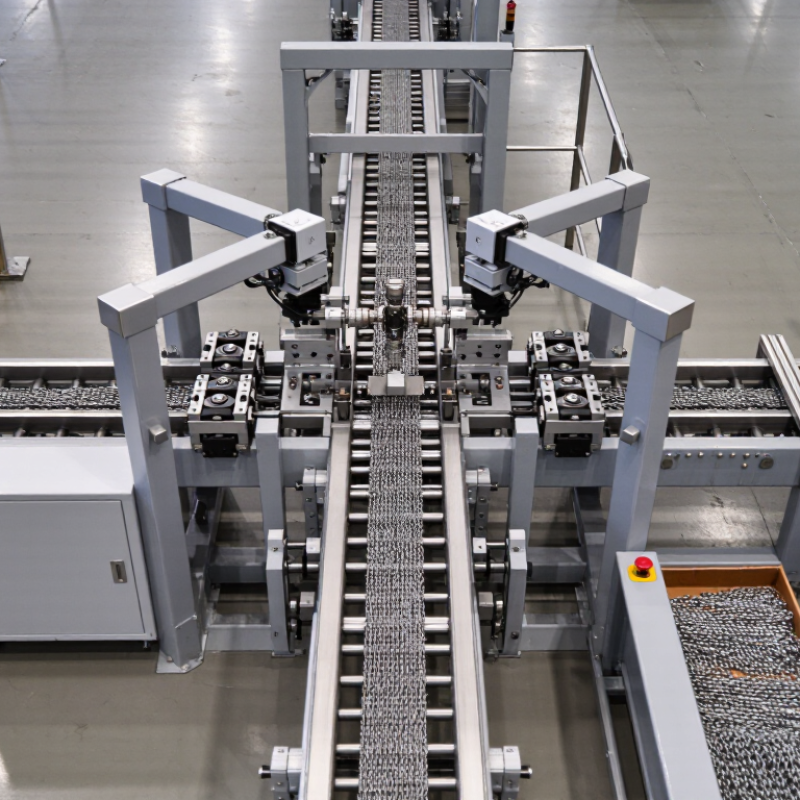
A ball chain coupling machine is an automated system that forms, assembles, and checks small metal chain couplings. It typically feeds wire, shapes connector links, inserts balls, and closes joints with controlled pressure. Some models also include cutting, counting, and camera inspection. The machine replaces repeated hand operations with timed mechanical movements. That matters when every link must maintain similar spacing and tensile strength.

The U.S. Department of Energy reports that motor-driven systems consume about 23% of total U.S. electricity. Efficient automation can reduce unnecessary motion, idle running, and rework in production lines.

The International Federation of Robotics recorded 541,302 industrial robot installations worldwide in 2023. This figure shows how manufacturers are adopting repeatable automation, even though a chain machine is usually more specialized than a robot cell.

In practical use, operators watch wire tension, ball positioning, and closing force. A misaligned ball can create a visible gap or weak connection. Small defects become expensive later.

Not every factory needs full automation. Low-volume production may still favor skilled assembly. That is an uncomfortable point.

A reliable machine should provide adjustable tooling, stable feeding, emergency protection, and traceable quality records.

Production data should include output rate, reject percentage, downtime, and energy use. Marketing claims often emphasize speed alone. That is incomplete.

A fast machine producing inconsistent couplings is not efficient. Test samples under real load before selecting the final configuration.
How Does a Ball Chain Coupling Machine Work?

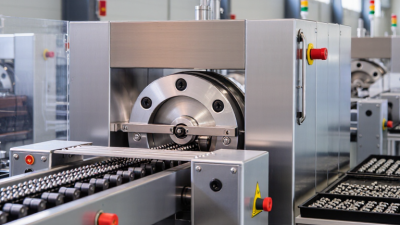
A ball chain coupling machine works by converting loose metal balls and connector components into a continuous, flexible chain. The process usually begins with a vibratory feeder. It separates and orients each ball before sending it through a guide rail. A forming unit then places the connector between selected balls. A servo-driven press closes the joint with controlled force. Small sensors check position, spacing, and missing parts during the cycle.

The coupling stage needs careful timing. If the press acts too early, the connector may deform. If pressure is too low, the joint can loosen during tension testing. Experienced operators adjust feed speed, tooling clearance, and press force for each material batch. In practice, alignment is rarely perfect. That matters. A reliable machine therefore combines mechanical guides with optical or proximity sensors. According to the International Federation of Robotics, World Robotics 2024 reported 541,302 industrial robot installations in 2023. This wider automation trend supports the use of repeatable, sensor-based assembly equipment.

Output speed is only one performance measure. The machine should also control scrap, noise, maintenance time, and operator access. The U.S. National Institute for Occupational Safety and Health emphasizes guarding and risk assessment around automated machinery. A practical acceptance test should record coupling strength, chain length accuracy, and fault frequency over several production runs. One inspection is not enough. Ball diameter, connector hardness, and lubrication can change results, so machine settings may require ongoing review.

What Advantages Does This Machine Offer?

Why Choose a Ball Chain Coupling Machine?

A ball chain coupling machine can improve production consistency, speed, and operator control. It feeds components, forms connections, and checks alignment through repeatable cycles. Manual assembly often varies between shifts. Small differences can affect tension, spacing, and finished appearance.

The advantages become clearer on a busy production floor. A programmed machine can maintain steady output while reducing repetitive hand movements. The International Federation of Robotics reported 541,302 industrial robots were installed worldwide in 2023, showing the wider move toward automated manufacturing. A coupling machine also supports faster changeovers when recipes, tooling, and inspection settings are stored digitally. Less adjustment time matters.

Not perfect, though.

The setup still requires skilled judgment. Poorly calibrated feeding rails may cause jams, uneven coupling, or wasted material. Operators should inspect chain tension, joint strength, and sensor accuracy during every shift. Deloitte’s 2024 Smart Manufacturing Survey found that 86% of manufacturers expect smart manufacturing to become a major competitiveness factor within three years. That expectation depends on reliable data, not automation alone. A machine that records output, rejects, and stoppages helps engineers find recurring faults earlier. It can also improve workplace ergonomics by limiting repetitive gripping. The real advantage is controlled consistency, but only when maintenance and training receive equal attention.

Why Choose a Ball Chain Coupling Machine?

Nominal ball diameters across commonly used ball-chain sizes

A ball chain coupling machine is valuable because one production platform can support multiple standard chain sizes. This flexibility helps manufacturers serve different applications, simplify tooling changes, and maintain consistent coupling quality across small, medium, and large ball-chain products.

Values shown are nominal ball diameters commonly used for standard ball-chain sizing; actual dimensions may vary according to material, tolerance, and production specification.

Where Are Ball Chain Coupling Machines Used?

Ball chain coupling machines are used where compact torque transmission meets repeatable production. They assemble, press, align, and inspect chain-based couplings for rotating equipment. Common sites include packaging plants, conveyor workshops, textile machinery factories, agricultural equipment lines, and light automation facilities.

Packaging equipment often uses these couplings between motors, shafts, and indexing systems. Their flexible chain design can tolerate limited shaft misalignment. This matters when machines operate near filling heads, rollers, or compact transfer units. Conveyor manufacturers also use them for controlled motion across short shafts. In textile production, they support synchronized rollers under continuous duty. International Federation of Robotics data recorded 541,302 industrial robot installations worldwide in 2023. That growth increases demand for consistent coupling components and automated assembly cells. Quality control is essential. A machine may check sprocket spacing, chain seating, torque, and runout before packing. The U.S. Department of Energy reports that motor-driven systems consume more than half of industrial electricity in many facilities. Poor alignment can increase friction, vibration, and energy loss. The process is not flawless. Dust, incorrect tension, or worn tooling can still create failures. Operators should review inspection records and recalibrate fixtures regularly. Small errors become expensive quickly.

How Should You Select and Maintain One?

Selecting a ball chain coupling machine starts with the chain, not the advertised speed. Confirm ball diameter, pitch, wire material, coupling style, and allowable dimensional tolerance. A machine should match your real production range, including smaller batches and frequent size changes. Check forming force, feed accuracy, cycle speed, and tool-change time. Ask for sample parts from your own material. A polished demonstration can hide difficult feeding conditions.

Safety and serviceability matter equally. Choose guarded moving parts, emergency stops, clear access points, and documented electrical controls. The U.S. Department of Energy’s Operations and Maintenance Best Practices Guide reports that predictive maintenance can reduce maintenance costs by 25–30% and downtime by 35–45%. These figures are useful benchmarks, not guarantees. Install vibration, temperature, or motor-current monitoring where practical. Keep lubrication controlled; excess oil can attract metal dust around the coupling area. Inspect feeders, dies, guides, and drive chains at scheduled intervals. Small wear becomes visible in uneven links first. Check alignment with calibrated tools, not eyesight alone.

Clean the work zone every shift. Record rejected pieces by cause, not only by quantity. Replace worn tooling before it damages several batches. Spare parts availability should influence the purchase decision. A lower initial price may become expensive after repeated stoppages. I would also question any supplier promising maintenance-free operation. No machine is truly maintenance-free. Even this advice needs review when materials, speeds, or safety requirements change.

Why Choose a Ball Chain Coupling Machine? - How Should You Select and Maintain One?

Decision area What to assess Selection guidance Maintenance practice
Chain size and design Ball diameter, pitch, wire or strip dimensions, and connector style required by the product drawing. Confirm the machine's tooling and adjustment range match the specified chain geometry; different sizes may require change parts. Check forming tools and guides for wear, damage, or buildup; verify finished parts against the drawing using suitable gauges.
Material compatibility Material type, thickness or wire diameter, hardness, and surface finish. Ask for a production trial using the actual material. Forming settings and tool life depend on material properties and product geometry. Keep material clean and properly guided; inspect contact surfaces for scoring and remove debris using the approved procedure.
Production capacity Required output, operating hours, changeover frequency, and time needed for inspection or replenishment. Compare demonstrated good-part output—not only the machine's nominal cycle rate—and allow for setup, material changes, and quality checks. Track stoppages, scrap, and output by shift to identify wear, feeding problems, or process drift.
Feeding and cutting Feed consistency, cut length, part orientation, and how the machine handles jams or misfeeds. Evaluate feed and cut quality during a trial run. Look for repeatable length and clean cuts appropriate to the product specification. Inspect feed rollers, cutters, and sensors for wear or contamination; isolate power before clearing a jam, following the machine instructions.
Coupling or connector assembly Connector type, attachment method, alignment, and required retention or functional checks. Confirm the machine supports the intended connector and can produce assemblies that meet the applicable drawing and acceptance criteria. Check assembly tooling and alignment. Sample finished joints for secure attachment and visible defects according to the quality plan.
Controls and changeover Adjustment access, recipe or setting storage, guarding, emergency stops, and changeover steps. Choose controls operators can use consistently, with clear setup instructions and safety features appropriate to the installation. Test safety devices at the intervals specified by the machine documentation; record approved settings and changes.
Maintenance and support Access to wear parts, documentation, operator training, and local technical assistance. Review the parts list, maintenance instructions, and training requirements before purchase; confirm which consumables need routine replacement. Follow the manufacturer's maintenance schedule for lubrication, cleaning, inspection, and replacement; keep a service and downtime log.

Note: Machine capabilities and service intervals vary by design and operating conditions. Confirm specifications, safety procedures, and maintenance intervals in the machine documentation.