Top Centrifuge Jewelry Manufacturers for Global Buyers
Centrifuge Jewelry manufacturers serve buyers who need repeatable castings, clean detail, and dependable production schedules. A small ring head, a thin shank, or a rough sprue can reveal how carefully a workshop controls its process. These details matter. Buyers should compare alloy options, mold capacity, finishing standards, inspection procedures, and communication—not just quoted prices.
Market conditions make that comparison more important. The World Gold Council’s Gold Demand Trends: Full Year 2024 reported global gold-jewellery demand of 1,877 tonnes, an 11% year-on-year decline. Its figures show why manufacturers must manage metal use and production costs closely. McKinsey’s State of Fashion: Watches and Jewellery 2024 also examines shifting consumer expectations and industry pressures. Together, these reports offer useful context, though neither measures the centrifuge-jewelry manufacturing segment alone. That distinction is easy to miss.
A reliable supplier can explain how it handles wax patterns, burnout, casting temperature, and finishing checks. Ask for sample pieces. Inspect edges and fine features under direct light. Then confirm lead times and the process for resolving defects. There is no perfect shortlist. A lower quote may hide trade-offs, and a polished catalog proves little about consistency. No independently verifiable quotation from a named centrifuge-jewelry specialist was provided for this introduction, so inventing one would undermine trust. Buyers deserve evidence, not borrowed authority.
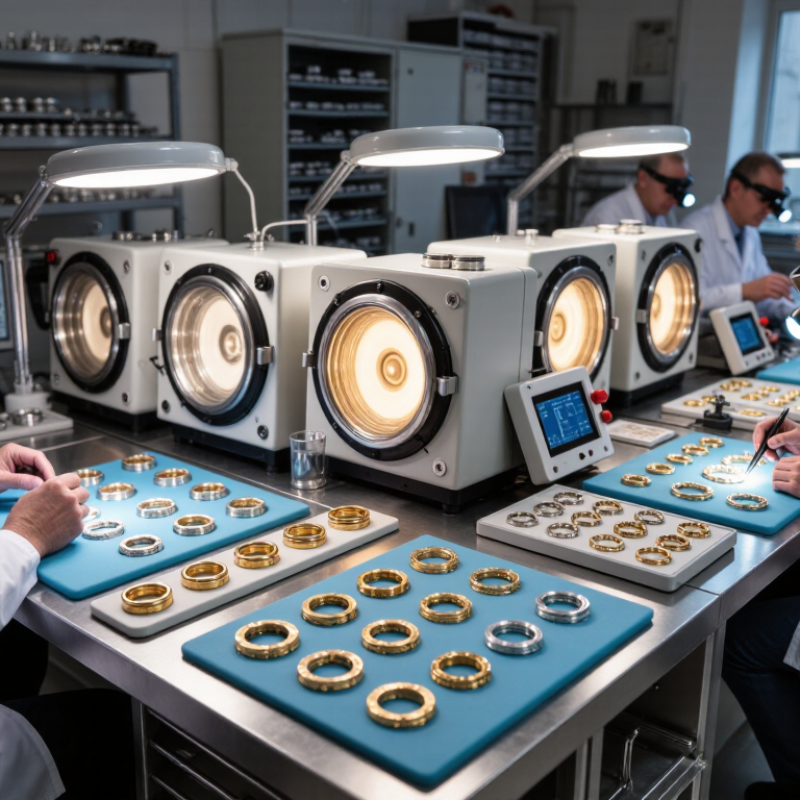
Centrifuge Jewelry Casting: Process and Industry Overview
Centrifugal jewelry casting uses rotation to drive molten alloy from a central sprue into investment-mold cavities. A typical cycle includes wax-tree assembly, investment, burnout, melting, spinning, cooling, and finishing. Technicians monitor flask temperature, alloy charge, spin timing, and metal cleanliness. A thin ring shank may fill differently from a broad pendant. Small details matter.
The World Gold Council’s Gold Demand Trends: Full Year 2024 reported global gold-jewelry demand of 1,877 tonnes, down 11% from 2023. This figure tracks demand, not casting methods, but it reflects a market where material costs can shape purchasing decisions. For manufacturers, stable casting weight and repeatable finish matter. So does careful scrap recovery.
Centrifugal force can help fill intricate cavities, but it cannot guarantee defect-free pieces. Excessive turbulence, unsuitable flask temperatures, or a poorly designed sprue may contribute to porosity or incomplete filling. The method is not magic. Buyers can ask suppliers about process controls, alloy records, equipment maintenance, and sample inspection. A bright polish may conceal internal flaws, so visual checks alone are not enough. Casting results still need verification.
How to Assess Centrifuge Jewelry Manufacturers
When assessing centrifuge jewelry manufacturers, look beyond polished product photos.
Ask how they control metal temperature, mold preparation, and spin consistency. These details affect fill quality, surface finish, and the amount of rework needed.
Small details matter.
Request close-up images of castings, including edges and recessed areas, where pits or incomplete fills can be easier to spot.
Ask for evidence.
Useful proof includes sample pieces from different production runs, inspection records, and clear explanations of acceptable tolerances. A single flawless sample can hide variation. Compare several pieces of the same design, and check weight, dimensions, and finish under consistent lighting. If possible, ask what equipment is maintained in-house and how operators check balance and performance before casting.
Specific answers are more reassuring than broad claims.
Communication is part of production quality.
A capable supplier should explain what design features may be difficult to cast and suggest practical adjustments, such as widening a very thin section. Ask how defects are recorded and handled, and whether the supplier can keep approved samples for comparison. Do not rely on a low quote alone; clarify sample costs, lead times, capacity, and packaging details in writing.
Even then, some variation may remain, so define the checks that matter most before placing a larger order.
Leading Centrifuge Jewelry Manufacturers for Global Buyers
Leading centrifuge jewelry manufacturers for global buyers are defined by more than machine output. They should explain how capacity, rotation speed, and flask dimensions affect different casting needs. Ask for technical sheets and operating guidance before comparing quotations. Clear answers make equipment easier to assess.
Useful details often appear in the workshop. A stable centrifuge should sit securely, with guards fitted and controls easy to reach. Ask how the machine handles routine cleaning, vibration checks, and replacement parts. Request a live demonstration or a test using a representative flask, if practical. Small details count.
Reliable manufacturers also provide consistent documentation, realistic lead times, and responsive technical support across time zones. Check whether installation instructions are clear and whether staff can troubleshoot common issues remotely. A polished brochure is not proof of dependable service. Nor is the lowest price. Buyer reviews and sample tests can help, but they may not reveal long-term performance. No checklist catches everything, and that is worth remembering when selecting equipment for a busy production floor.
Comparing Manufacturer Capabilities, Quality, and Pricing
A useful comparison of centrifuge jewelry manufacturers starts with the work each machine must handle. Ask about flask dimensions, melt capacity, alloy compatibility, and cycle controls. A compact workshop may value easy loading and a small footprint; a production floor may need repeatable cycles and accessible maintenance points. Request a sample casting or documented test results using a similar alloy. Details matter. Check whether the supplier provides operating guidance, spare-part availability, and clear service response times.
Quality claims are easier to assess when tied to evidence. Look for temperature-control specifications, inspection records, and consistent casting results across repeated runs. Ask how the machine manages vibration and whether safety interlocks are included. A polished brochure is not a test report. Pricing needs the same scrutiny: compare tooling, installation, training, consumables, shipping, and warranty coverage alongside the machine price. A lower quote may leave out useful fixtures or after-sales support. Conversely, added capacity can be unnecessary for a small team. Not always. Request an itemized quotation and compare it with your actual production schedule. One detail buyers sometimes overlook is downtime: a machine that is cheaper upfront may cost more if common replacement parts take weeks to obtain. Do the numbers still work?
Top Centrifuge Jewelry Manufacturers for Global Buyers
A practical comparison framework for evaluating manufacturer capabilities, quality, and pricing.
Quality and process control receive the largest share in this illustrative procurement model, followed by production capacity and technical support. These are buyer-assigned evaluation weights, not measured market statistics or supplier-specific data.
Sourcing, Compliance, and International Partnership Considerations
Top Centrifuge Jewelry Manufacturers for Global Buyers
Global buyers should assess centrifuge manufacturers beyond machine price and advertised capacity. The World Gold Council reported global gold jewellery consumption of 1,877 tonnes in 2024, down 11% from 2023. Demand can shift quickly, so production flexibility matters. Ask suppliers how they test casting consistency across different batch sizes. Request sample results, maintenance intervals, and clear operating limits. A real test beats a polished brochure.
Cross-border partnerships also depend on documented quality controls and traceable materials. The OECD Due Diligence Guidance for Responsible Supply Chains of Minerals identifies gold and sets out a five-step framework for responsible sourcing. Buyers can ask suppliers to explain their material records and provide applicable quality-system documents. Confirm that invoices, packing lists, and machine specifications match the destination market’s import requirements. Small details matter. A certificate alone does not prove consistent performance, and buyers should verify its scope and validity. Factory visits or live acceptance tests can reveal practical issues, such as uneven pouring or unclear service arrangements. Not every supplier will offer the same level of documentation; that gap deserves a direct conversation before signing.





 Lily
 Jason wong