China Best Basic Jewelry Making Tools for Global Buyers
Choosing the right Basic Jewelry Making Tools can shape every stage of jewelry production, from the first wire cut to the final polish. For global buyers, the decision involves more than price. Tool quality, material strength, handle comfort, packaging, and supplier reliability all matter.
Charles Lewton-Brain, a respected metalsmith, educator, and tool specialist, has emphasized, “The tool should fit the hand, not the hand fit the tool.” This principle remains practical today. A jeweler working with silver wire needs smooth-jaw pliers that prevent visible marks. A bench worker needs sharp flush cutters, stable tweezers, precise files, and a comfortable ring mandrel. Small details become large costs when tools slip, scratch, or break.
This guide examines China’s Basic Jewelry Making Tools for international buyers. It considers manufacturing experience, inspection practices, material choices, and communication standards. Buyers should review jaw alignment, spring action, cutting capacity, steel hardness, and protective packaging before ordering. Clear product photos help, but they cannot replace samples or testing.
No list is perfect. A lower-priced tool may perform surprisingly well, while an expensive model may disappoint. That uncertainty deserves attention. Reliable suppliers should provide specifications, batch checks, replacement support, and consistent quality across orders. Global purchasing also requires careful attention to customs documentation and destination-market requirements. The strongest buying decision balances performance, safety, price, and long-term usability. Practical evidence matters most.
Basic Jewelry-Making Tools from China: Six Core Categories for Global Buyers
China Best Basic Jewelry Making Tools for Global Buyers
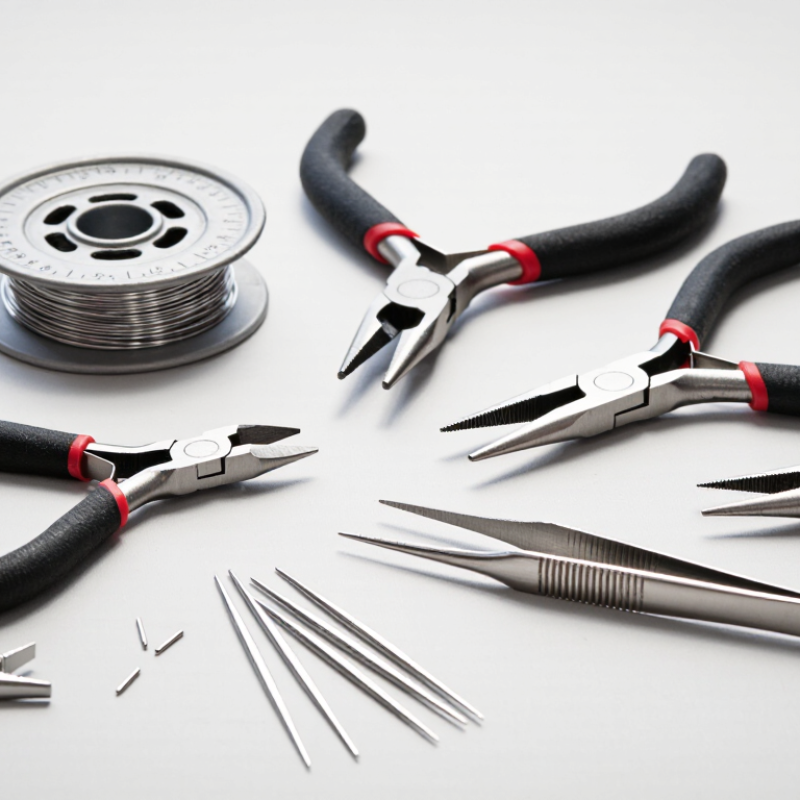
Global buyers sourcing basic jewelry-making tools from China often start with six core categories. These include cutters, pliers, forming tools, measuring tools, drilling and finishing tools, plus assembly and bench-safety equipment. This structure keeps a workshop practical. It avoids filling drawers with rarely used items. Grand View Research valued the global jewelry market at about USD 353 billion in 2023. World Gold Council reported 4,974.5 tonnes of total gold demand in 2024, with jewelry consumption near 1,877 tonnes. Reliable bench equipment therefore supports a large, active supply chain.
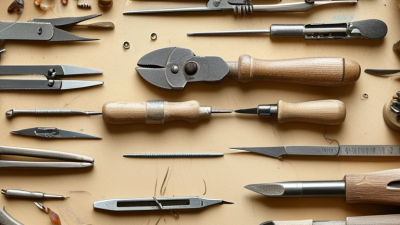
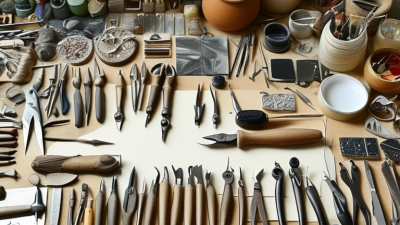
Cutters should deliver clean, repeatable snips. Flat-, round-, and chain-nose pliers need aligned jaws and smooth movement. Forming hammers, mandrels, and ring-sizing gauges help control shape. Calipers expose small dimensional errors. For drilling and finishing, buyers should inspect chuck stability, abrasive consistency, dust control, and replaceable parts. A low-cost tool may look polished in a catalog. It can still mark soft metal.
When comparing Chinese suppliers, request material specifications, hardness ranges, tolerance data, sample videos, and inspection records. ISO 9001 supports process control, but it does not prove every tool performs equally. That distinction matters. The International Trade Centre’s Trade Map can help verify tariff codes and supplier information. Small trial orders are wiser than impressive volume discounts. Packaging also matters: separated jaws, rust barriers, and shock-resistant trays reduce transport damage. One weakness remains. Price comparisons often ignore calibration time, rejected pieces, and worker fatigue. Those hidden costs deserve measurement before a long-term order.
Tool Materials and Finishes: 304 Stainless Steel, Carbon Steel, and HRC Ratings
For global buyers, basic jewelry tools should be judged by material, finish, and measurable hardness. The World Stainless Association reported 58.4 million tonnes of stainless steel production in 2023. That scale reflects strong industrial demand, but it does not make every stainless tool equal. 304 stainless steel contains roughly 18% chromium and 8% nickel, offering useful resistance to moisture and skin contact. It suits cutters, tweezers, and pliers used in humid workshops. Finish matters. A polished jaw reduces drag and visible marks on soft wire.
Carbon steel can provide higher working strength after heat treatment. It is often suitable for cutting harder wire, but it needs oiling and dry storage. Surface oxidation can begin around a hinge or unfinished jaw. This detail is easy to miss. In my purchasing checks, a smooth black coating sometimes looks durable, yet it can hide uneven grinding underneath. Buyers should inspect jaw alignment, hinge movement, and coating consistency under bright light.
HRC ratings describe Rockwell C hardness, tested under ASTM E18 procedures. A claimed HRC 50 is more useful than “professional grade,” but only when the tested area and method are disclosed. For general jewelry pliers, a balanced range near HRC 45–55 may support toughness and repeated use; excessive hardness can make thin jaws brittle. Carbon-steel cutters may require different hardness zones at the edge and body. Not always. A higher number is not automatically better. Reports from the International Organization for Standardization also stress consistent testing, though workshop tools still show manufacturing variation. This remains a purchasing weakness. Ask for material certificates, hardness records, and sample testing before placing large orders.
China Sourcing Essentials: HS Code 8203, MOQ, Lead Time, and Quality Control
China remains a practical source for basic jewelry-making tools, including cutters, pliers, tweezers, and punches. Many of these products fall under HS Code 8203, but the exact subheading depends on tool design and material. Confirm classification with customs before shipping. A wrong code can delay clearance.
Typical factory MOQs range from 100 to 500 sets for standard tools. Customized handles or packaging may require 500 to 1,000 sets. Stock items can ship within 7–15 days. Customized orders often need 25–45 days, including sampling. The WTO World Trade Statistical Review 2024 reported a 1.2% decline in global merchandise trade volume during 2023. Buyers should therefore allow buffer time for changing freight schedules. A spreadsheet can look precise.
Quality control should begin before production. Request samples and check jaw alignment, cutting performance, spring tension, surface finish, and handle comfort. For stainless-steel tools, verify corrosion resistance and material declarations. Use ISO 2859-1 sampling procedures, with agreed AQL levels for cosmetic and functional defects. The World Bank’s 2023 Logistics Performance Index gave China an overall score of 3.7 out of 5, supporting stable logistics but not guaranteeing every shipment. In practice, inspect at least 10 random units from each carton. One overlooked loose joint can damage a customer’s work. Price still matters, but low MOQ is not always cheaper.
China Best Basic Jewelry Making Tools for Global Buyers - China Sourcing Essentials: HS Code 8203, MOQ, Lead Time, and Quality Control
| Tool Category |
Typical Material |
Common Size |
Typical China MOQ |
Indicative Export Price* |
Typical Lead Time |
HS Code Reference |
Recommended Quality Checks |
| Round-Nose Pliers |
Carbon steel or stainless steel; PVC or TPR handles |
115–130 mm |
100–500 pieces |
US$0.80–3.50 per piece |
15–30 days after sample approval |
HS 8203.20; confirm national tariff schedule |
Jaw symmetry, smooth rotation, tip alignment, handle grip, rust protection |
| Flat-Nose Pliers |
Hardened carbon steel or stainless steel |
115–130 mm |
100–500 pieces |
US$0.80–3.80 per piece |
15–30 days |
HS 8203.20; classification should be verified |
Jaw parallelism, opening resistance, burrs, surface finish and coating adhesion |
| Chain-Nose Pliers |
Carbon steel with nickel, chrome or black oxide finish |
115–125 mm |
100–500 pieces |
US$0.90–4.00 per piece |
15–30 days |
HS 8203.20; confirm customs treatment |
Nose taper, jaw closure, hinge smoothness, plating uniformity and corrosion resistance |
| Flush Cutters |
High-carbon steel or alloy steel; induction-hardened cutting edges |
110–130 mm |
100–500 pieces |
US$1.20–5.50 per piece |
20–35 days |
HS 8203.20; verify according to cutting function |
Cutting capacity, edge alignment, hardness consistency, spring operation and chip resistance |
| Jewelry Shears |
Stainless steel or hardened carbon steel |
95–125 mm |
100–300 pieces |
US$1.00–4.50 per piece |
15–30 days |
HS 8203.30 may apply; confirm tariff classification |
Blade contact, cutting test on specified wire, pivot tightness and safe packaging |
| Precision Tweezers |
Stainless steel, carbon steel or anti-static alloy |
100–150 mm |
200–1,000 pieces |
US$0.30–2.50 per piece |
15–25 days |
HS 8203.20 may apply; confirm product construction |
Tip meeting, tip thickness, spring force, corrosion resistance and dimensional accuracy |
| Jewelry Files |
High-carbon tool steel with cut teeth |
100–180 mm |
100–500 sets |
US$1.50–7.00 per set |
20–35 days |
HS 8203.10; verify file or rasp specifications |
Tooth uniformity, hardness, handle security, length tolerance and cutting performance |
| Ring Mandrels |
Aluminum, stainless steel, carbon steel or hardwood |
200–300 mm length |
50–300 pieces |
US$2.00–10.00 per piece |
15–30 days |
Classification varies by material and use; HS 8205 may be considered for some hand tools |
Size-mark accuracy, straightness, surface smoothness and resistance to deformation |
| Beading Awls |
Hardened steel shaft with wood, plastic or metal handle |
100–150 mm |
100–500 pieces |
US$0.40–2.50 per piece |
15–25 days |
HS 8205 may apply; confirm the exact tool type |
Shaft straightness, point sharpness, handle bonding and protective cap security |
| Manual Wire Cutters |
Alloy steel or high-carbon steel |
125–160 mm |
100–500 pieces |
US$1.00–5.00 per piece |
20–35 days |
HS 8203.20; confirm cutting-tool classification |
Specified wire cutting test, blade gap, hardness, handle insulation and hinge durability |
Buyer Notes:
Prices, MOQs and lead times are typical China sourcing ranges for standard, unbranded products and may change with material grade, finish, packaging, customization, order quantity and shipping terms. HS 8203 generally covers certain hand tools such as pliers, pincers, tweezers, metal-cutting shears, pipe cutters, bolt cutters, perforating punches and similar tools; the final HS classification must be confirmed with the importer’s customs authority or a licensed customs broker.
| Quality-Control Stage |
Recommended Inspection Scope |
Acceptance Guidance |
| Pre-Production |
Confirm approved sample, drawings, material grade, hardness target, surface finish, packaging and labeling. |
Use a signed specification sheet and retain an approved golden sample. |
| During Production |
Check dimensions, jaw or blade alignment, hinge operation, coating consistency and workmanship. |
Identify process defects before final assembly and packaging. |
| Pre-Shipment |
Perform visual, dimensional, functional and packaging inspections; use random sampling where appropriate. |
Define AQL levels contractually; ISO 2859-1 is commonly used as a sampling reference. |
| Documentation Review |
Review commercial invoice, packing list, carton dimensions, certificate of origin when required, and any applicable material or chemical declarations. |
Match documents with the purchase order and destination-country import requirements. |
Global Compliance Data: REACH Nickel Release Limit of 0.5 μg/cm²/Week
For global buyers, sourcing basic jewelry-making tools from China involves more than price, assortment, and delivery speed. Nickel compliance deserves equal attention. Under REACH, relevant articles intended for prolonged skin contact must not release more than 0.5 μg/cm² per week. This figure measures nickel release, not simply total nickel content. Pliers, cutters, files, and mandrels may touch hands during production. Their surfaces should remain stable, clean, and free from transferable residues. Small details matter.
A reliable purchasing process requests material declarations, coating specifications, batch traceability, and independent laboratory reports. Ask whether testing followed the applicable EN 1811 method. Coated items may also require simulated wear testing before nickel release is assessed. Check finished samples, not only supplier paperwork. A smooth stainless-steel tool is often practical, but its alloy and surface treatment still need verification. Store tools dry, and inspect chipped plating before use.
A certificate is not a shield. A common mistake is accepting one report for every future batch. That feels efficient, yet it can miss changes in plating, polishing, or raw materials. Recheck representative batches when production changes. Keep records with purchase orders and inspection photos. Compliance work is sometimes imperfect. Careful questions reduce expensive surprises for workshops and global customers.



 Lily
Lily Jason wong