Choosing the right Cad Cam Jewelry Machine is a crucial decision for any jewelry maker. The right machine can enhance design precision and reduce production time. However, the variety of options available can be overwhelming. Understanding your specific needs is essential. This guide will delve into key factors to consider.
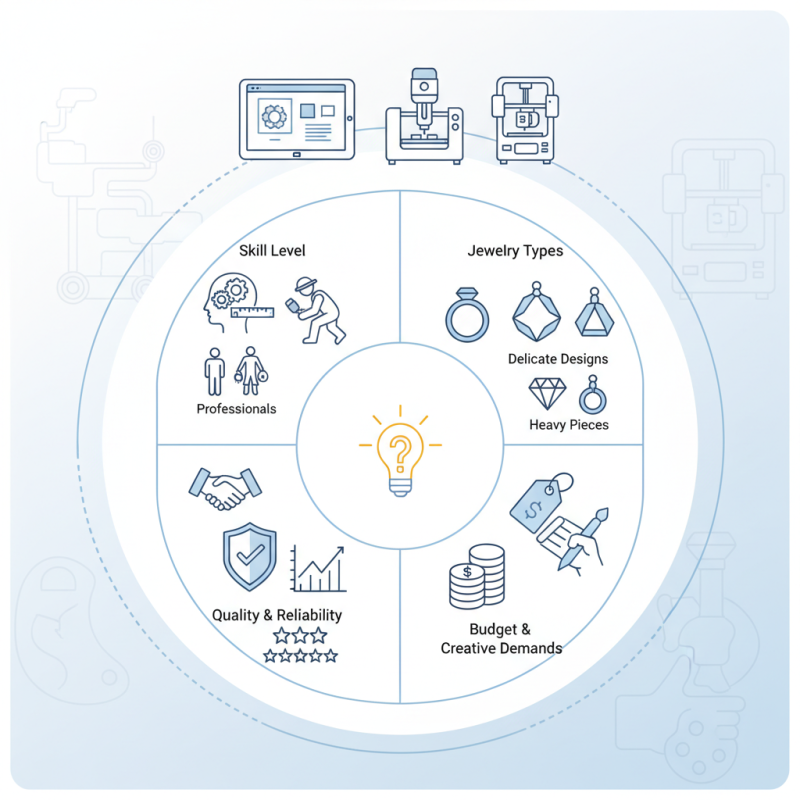
When selecting a Cad Cam Jewelry Machine, consider your skill level. Some machines cater to beginners, while others are designed for seasoned professionals. It's important to evaluate the features that align with your expertise. Also, think about the types of jewelry you create. Different machines may offer unique capabilities for various designs.
Quality and reliability are critical. Investing in a machine that may not perform consistently can lead to frustration. User reviews and recommendations from trusted sources can provide valuable insights. Choose a machine that not only fits your budget but also meets your creative demands. The right Cad Cam Jewelry Machine should inspire your artistry and elevate your craftsmanship.
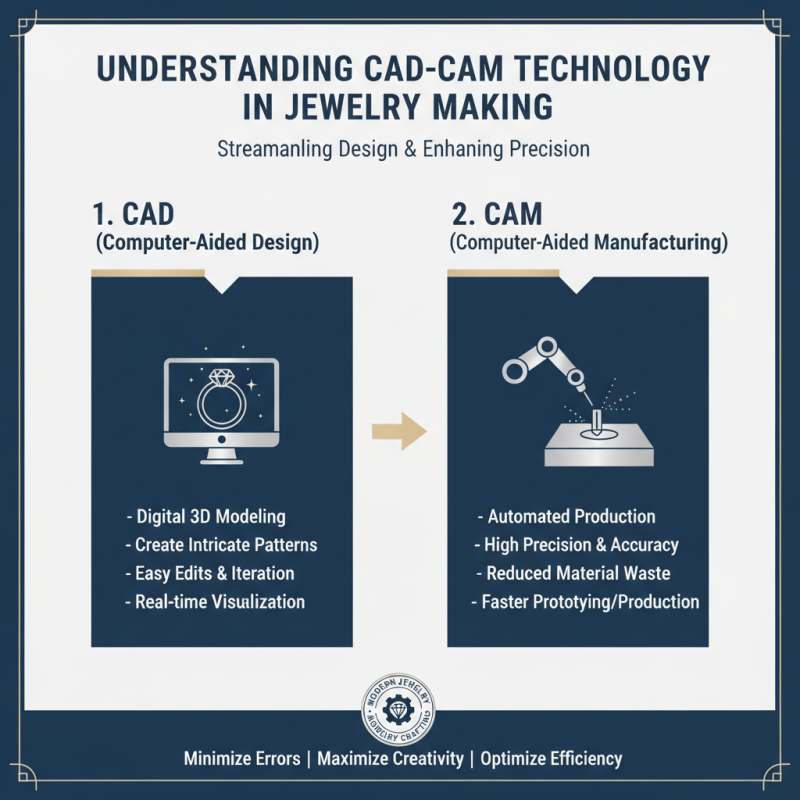
Understanding CAD/CAM technology is crucial for modern jewelry making. This technology combines computer-aided design (CAD) with computer-aided manufacturing (CAM). It streamlines the design process and enhances precision in crafting jewelry. Designers can create intricate patterns quickly. Errors in manual crafting often lead to waste or dissatisfaction. CAD/CAM minimizes these risks by allowing for easy edits and real-time results.
The use of CAD software gives jewelers freedom to experiment with designs. Creating a digital prototype saves time and resources. Jewelers can visualize end products more effectively. However, mastering CAD software can be challenging. Not every designer finds the interface intuitive. Ongoing training is often necessary to harness its full potential. Consequently, many may encounter a learning curve that can be frustrating.
Incorporating CAM systems adds another layer of capability. It allows for automated production methods. This fosters efficiency but also raises questions about craftsmanship. Will mass-produced pieces lose the soul of traditional artistry? Jewelers face the dilemma of maintaining uniqueness while embracing technology. Balancing innovation with artistry remains a critical conversation in the industry. As techniques evolve, reflecting on these aspects becomes vital to sustaining the art of jewelry making.
Choosing the right CAD/CAM jewelry machine involves several critical factors. First, consider the machine's precision. Precision is essential in jewelry design. According to a report by the Jewelry Industry Report, 85% of jewelers say accuracy impacts customer satisfaction. A machine that can deliver fine details will set your designs apart.
Another key factor is software compatibility. The learning curve can vary significantly. Some systems integrate seamlessly with existing software. Others may require extensive training. In a recent survey, 60% of users noted challenges with software transitions. As technology advances, the software needs keep evolving. It’s crucial to ensure smooth integration to avoid workflow disruptions.
Don't overlook support services. Reliable customer support can make a huge difference. Equipment downtime can lead to lost revenue. In particular, 70% of businesses reported reduced productivity due to inadequate support. Investing time in research can reveal the level of support you can expect. Consider these factors carefully when making your decision.
When evaluating CAD/CAM systems for jewelry making, software features play a vital role. A powerful system should include intuitive design tools. Ease of use helps jewelers create intricate designs faster. Features like 3D modeling and simulation can enhance creativity. Over 70% of jewelers highlight these elements as crucial for their workflows.
Compatibility is another essential factor. Ensure that the software interacts seamlessly with hardware. A disconnect can hinder productivity, leading to costly mistakes. Security features add another layer of reliability. According to industry reports, around 35% of users encounter data loss issues. Thus, robust data protection is not just a bonus; it's necessary.
Keep an eye on software updates and support. Many CAD/CAM systems evolve frequently. Regular updates can improve functionality and introduce new tools. An active support team is invaluable, especially for problem-solving. In a dynamic industry, having reliable assistance can make a significant difference. Selecting the right software involves recognizing these subtleties and reflecting on past experiences.
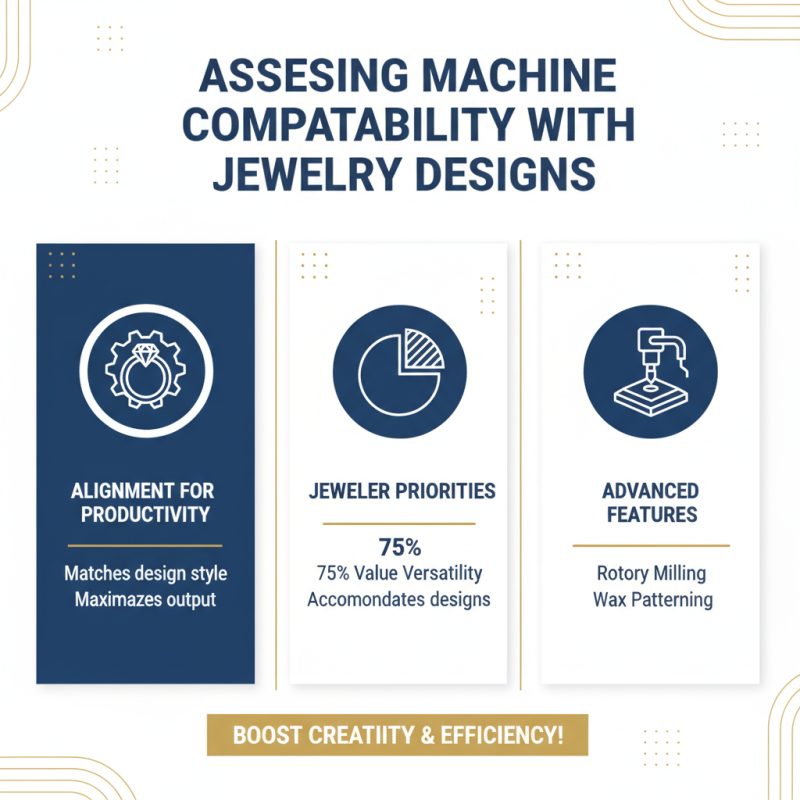
Choosing the right CAD CAM jewelry machine involves assessing how well it aligns with your specific jewelry designs. Compatibility is key to maximizing productivity and creativity. Recent studies indicate that 75% of jewelers prioritize machine versatility to accommodate various design styles. Many machines now offer advanced features such as rotary milling and wax pattern capabilities. These features can greatly enhance the production process.
It’s essential to consider the intricacies of your designs. If you specialize in intricate filigree work, a machine with high precision might be necessary. Reports show that 85% of jewelers experienced an increase in client satisfaction after investing in precision tools. However, one size does not fit all. Some jewelers find that a machine's software may not support their preferred design programs. This mismatch can lead to delays and frustrations.
Moreover, evaluating the materials you use is important. Most machines excel with specific types of materials. If your work predominantly uses precious metals and gemstones, ensure the machine is capable of handling such tasks. Many professionals still overlook this aspect, leading to costly errors. Understanding compatibility not only improves efficiency but also paves the way for innovative design solutions. Each decision should reflect your unique artistry and operational needs.
Investing in a CAD/CAM jewelry machine requires careful budgeting. Industry reports indicate that the average cost of these machines can range from $20,000 to $100,000. This wide price range stems from varying features and capabilities. Opting for advanced technology may initially seem beneficial, yet it could strain your budget. Understanding your actual needs is crucial.
Consider not just the machine cost, but also ongoing expenses. Software updates, maintenance, and materials can quickly add up. Research shows that 30% of owners overlook these hidden costs, which can result in financial strain. It’s vital to create a comprehensive budget that accounts for both initial purchase and long-term operational costs.
Reflecting on your specific needs can lead to better choices. Are intricate designs necessary for your market? If your volume is low, a more basic model might suffice. Many jewelers report regret over overspending on features they rarely use. Evaluate your business model and consult with experts to ensure your investment aligns with your actual demand. Making informed decisions can save money and improve your bottom line.
| Tip | Description | Budget Range | Key Features |
|---|---|---|---|
| 1. Define Your Needs | Assess the specific requirements for the type of jewelry you create. | $10,000 - $20,000 | User-friendly interface, software compatibility |
| 2. Research Options | Look for different brands and models, focusing on user reviews. | $5,000 - $25,000 | Speed, precision, material compatibility |
| 3. Understand the Software | Evaluate the CAD software that comes with the machine and its ease of use. | Included in machine cost | Design flexibility, updates |
| 4. Check Training Support | Ensure that training is provided to maximize the machine's use. | Free - $2,500 | Online resources, personal training sessions |
| 5. Evaluate Maintenance Costs | Understand ongoing maintenance requirements and costs. | $500 - $2,000 per year | Warranty options, service availability |
| 6. Assess Production Speed | Consider the machine's speed to meet business demands. | Varies greatly | Cycle time, output capacity |
| 7. Determine Size and Space | Evaluate your workspace to ensure proper accommodation. | N/A | Footprint, portability |
| 8. Explore Customization Options | Look into machines that offer customizable features for unique designs. | Additional $1,000 - $5,000 | Software add-ons, hardware upgrades |
| 9. Compare Total Cost of Ownership | Assess the overall financial impact over the machine's lifespan. | $15,000 - $50,000 | Initial price, repair costs |
| 10. Seek Customer Testimonials | Gather feedback from current users to gauge satisfaction. | N/A | Success stories, case studies |